What Dog Trainers Can Learn From a Championship French Ring Team
People see the trial field.
They see the speed, precision, power, score, and celebration.
They do not always see the years of repetition, the failed attempts, the club members watching every detail, or the handler learning how to manage nerves when the stakes are high.
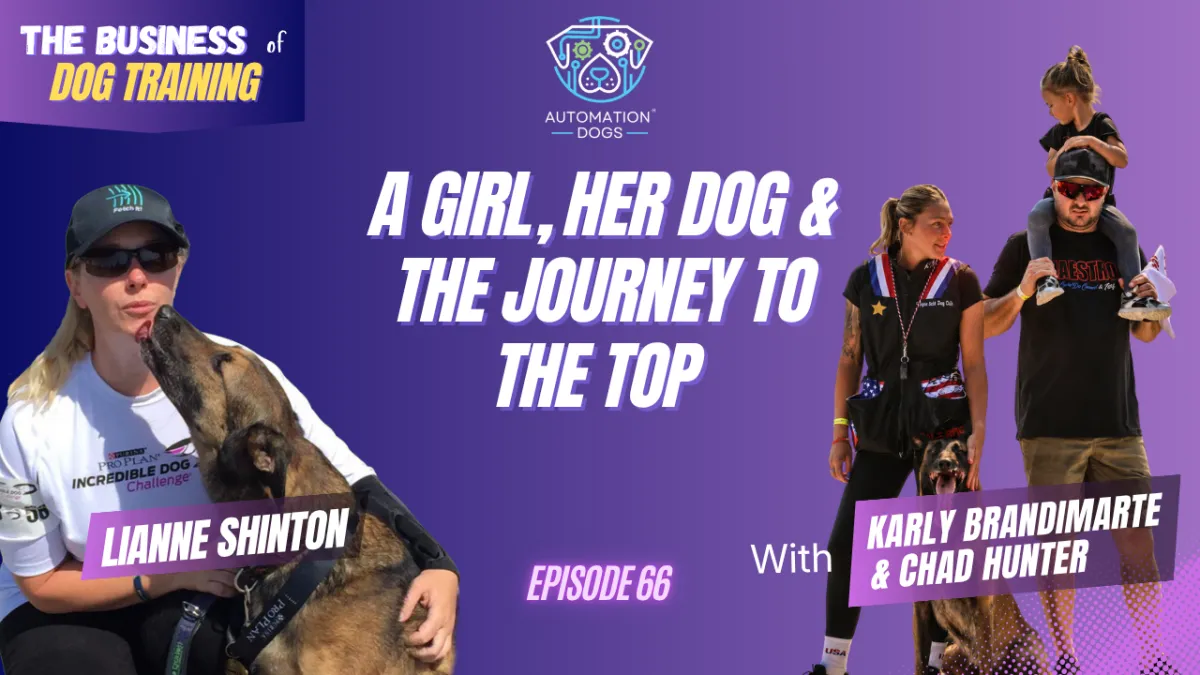
In my conversation with Karly Brandimarte and Chad Hunter of Hunter Canine, we talked about Maestro, their exceptional Malinois, and the work that carried their team to a major win in France.
An Exceptional Dog Still Needs Exceptional Training
Maestro showed promise almost immediately.
Chad noticed him as a very young puppy in a litter he bred. He was intense, fast, motivated, and eager to work. The neighbor who saw him training suggested the name Maestro, a master of the craft and it stayed.
Karly did not begin working with Maestro because she had a detailed plan to compete in France. He came to her at about 10 months old, and the larger goal developed much later.
Only after Maestro reached Ring III and experienced French decoys did respected people around them begin saying the dog could be competitive at that level.
Talent opened the possibility. Training, handling, resources, and commitment made the trip possible.
The Best Competition Dog Must Still Live a Real Life
On the field, Maestro works at full speed.
Off the field, he is affectionate, attached to his people, and happiest when he is close to them. He hikes, swims, lives in the house, and settles with the other dogs.
That balance matters.
But Chad and Karly also manage his intensity carefully. A dog who gives 110 percent can become a liability to himself. Casual ball play can lead to broken nails, rolled ankles, or other injuries when the dog has no natural slow setting.
Good training is not only about creating more drive. It is also about protecting the athlete and choosing activities intelligently.
Watch or Listen: Maestro, French Ring, and the Work Behind a Championship
In this conversation with Karly Brandimarte and Chad Hunter, Lianne talks about:
how Maestro developed from a promising puppy into a top competitor
why managing intensity is part of protecting a working dog
how a handler can build a competition routine for nerves
why honest club feedback accelerates progress
how daily homework supports the work done at club
why trainers should avoid rushing a dog onto the field
The Handler Has to Become Part of the Plan
Karly described feeling nervous before stepping onto the field.
She also described learning to turn that nervousness off when the work begins.
Her reasoning is simple: Maestro deserves the best version of his handler. If she is not mentally present, she cannot give him that.
That ability did not appear overnight. Maestro completed roughly 19 Ring III trials over a little more than two years. Repetition gave Karly the experience to breathe, focus, and move through the routine without letting emotion take control.
A competition routine is not only for the dog. The handler needs one too.
A Strong Club Does More Than Take Turns
High-level training requires honest eyes.
Karly and Chad described a club where members pay attention to each other’s sessions, ask questions, help on the field, and complete the homework between club days.
The dog reveals whether the work happened.
A position problem will not disappear because the team meets twice a week. Some skills require five- or ten-minute sessions at home every day. Club training provides feedback, but the handler still has to apply it.
The right team also removes ego. A less experienced handler may notice something a veteran missed. A club member working a related dog may recognize a familiar pattern. Everyone improves when the goal matters more than being right.
Slow Down Before You Step Onto the Field
One of Chad and Karly’s clearest pieces of advice is to stop rushing.
Slow down during the performance. Slow down while preparing the dog. Slow down before deciding the dog must compete by a certain age.
A rule book may say a dog is eligible at one year old. That does not mean the team is ready.
Some dogs step onto the field at two, three, four, or even later. A handler should not create an artificial deadline simply because another team progressed faster.
Success Depends on How You Handle Failure
Championship stories are easy to tell from the finish line.
Chad and Karly are equally clear about the failures that came before the win. High-level sport includes rough sessions, missed points, injuries, wrong decisions, and exercises that take much longer than expected.
Tenacity is not pretending those moments do not hurt.
It is learning from them, returning to the work, and continuing to build the team in front of you.
Maestro may be a unicorn. But the larger lesson applies to every dog trainer: talent matters, and the quiet repetitions still matter more than people see.
Want More Time to Focus on Training?
The best training requires attention, repetition, and a clear mind. Automation Dogs helps dog trainers organize the business side, lead follow-up, scheduling, sales, communication, and automation, so less energy is lost to administrative chaos.
If you want stronger systems behind your dog training business, book a FREE strategy session with Automation Dogs.
Learn more about Karly, Chad, and their breeding program at Chasseur Malinois and Hunter Canine

