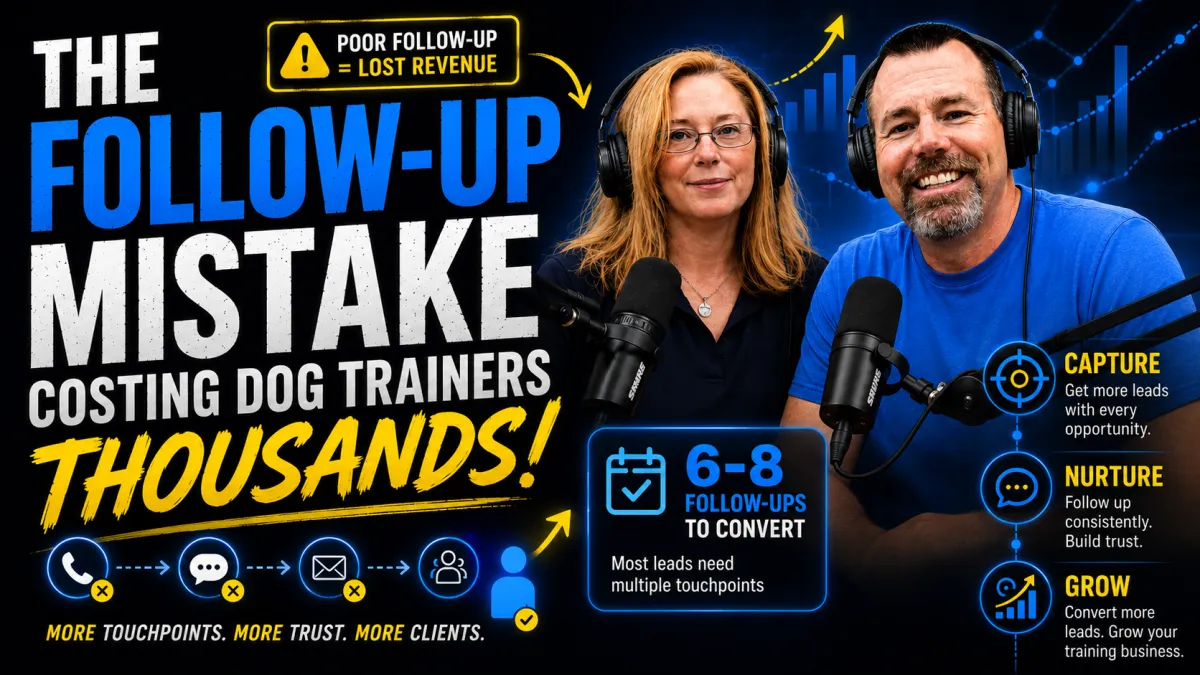
The Follow-Up Mistake Costing Dog Trainers Thousands!
The Follow-Up Mistake Costing Dog Trainers Thousands
Why One Follow-Up Is Not Enough to Close More Dog Training Clients
One of the biggest mistakes I see dog trainers make is assuming a lead is gone if they do not book right away.
But that is usually not true.
Many potential clients are not ignoring you because they are bad leads. They are busy. They may have a job, a spouse, kids, a chaotic schedule, and now a dog creating stress in the home.
They reached out because they need help.
But if you only follow up once and then stop, you may be leaving thousands of dollars on the table.
Most Leads Need More Than One Follow-Up
A lot of dog trainers believe that if someone does not book after the first call, text, or email, they must not be serious.
But many sales studies show that most leads need multiple follow-ups before they make a decision.
In many cases, people do not convert until after the sixth to eighth follow-up.
That is important for dog trainers to understand.
Your potential client may still want help. They may still be interested in your program. They may still be a great fit.
They may simply need you to stay in front of them long enough for them to take the next step.
Watch the Video: The Follow-Up Mistake Costing Dog Trainers Thousands
🎥 Watch the video here:
In this short training, Bret and I talk about:
why dog trainers should not give up after one follow-up
how slow or inconsistent follow-up can cost sales
why clients may seem like they are “ghosting” when they are actually overwhelmed
how speed to lead affects conversion
why follow-up should continue beyond the first few days
how automation can help dog trainers stay consistent
Speed Still Matters
Long-term follow-up is important, but the first few minutes matter too.
Bret shared that when he worked in car sales, leads had to be contacted within minutes. If he did not respond quickly, that lead could go to another salesperson.
Dog training is different, of course. You do not need to follow up as aggressively as a car dealership.
But the principle still applies.
When someone reaches out for help with their dog, they are usually motivated in that moment. If they contact multiple trainers, the one who responds first often has a major advantage.
That is why your follow-up system should do two things:
respond quickly when a new lead comes in
continue nurturing that lead if they do not book right away
Your Leads Asked for Help
Many dog trainers feel uncomfortable following up because they worry they are bothering people.
But remember this:
They contacted you first.
They filled out a form, called your business, sent a message, or requested information because they need help with their dog.
That is not cold outreach. That is a lead asking for guidance.
Following up is not being pushy. It is being helpful, professional, and consistent.
And if someone prefers not to receive texts, emails, or calls, they can opt out or let you know. That does not mean you should avoid following up with the people who do want your help.
The Right Follow-Up System Creates Consistency
The problem is that most dog trainers are trying to remember follow-up manually.
You might send a text when you finish cleaning kennels.
You might reply after a lesson.
You might remember a lead three days later.
You might forget completely because the day got busy.
That is where opportunities get lost.
A strong CRM and automation system can help dog trainers:
respond quickly to new leads
send follow-ups at better times
stay in front of potential clients for weeks or months
organize every inquiry in one place
reduce forgotten leads
improve sales consistency
save time during busy training days
The goal is not to remove the personal relationship.
The goal is to make sure no good lead disappears just because your day got full.
Most Dog Trainers Do Not Need to Chase More Leads First
Many trainers think they need more marketing, more ads, or more visibility.
Sometimes they do.
But often, the first step is improving what happens after someone already reaches out.
If your follow-up process is inconsistent, adding more leads may only create more missed opportunities.
Before spending more money on marketing, ask yourself:
How fast do we respond to new leads?
How many times do we follow up?
Do we follow up for more than a few days?
Are old leads being nurtured?
Do we know which leads still need attention?
Is everything organized in one system?
If the answer is unclear, your follow-up may be costing you sales.
Want Help Improving Your Follow-Up System?
At Automation Dogs, we help dog trainers improve their sales systems, lead follow-up, organization, and automation so they can close more clients without adding more chaos to their day.
If you want help creating a better lead follow-up process for your dog training business, book a FREE strategy session at Automation Dogs.

