
Unleashing the Power of Dog Training with
Tiffany Wetzel
February 10, 2026
69 min
Automation Dogs Podcast
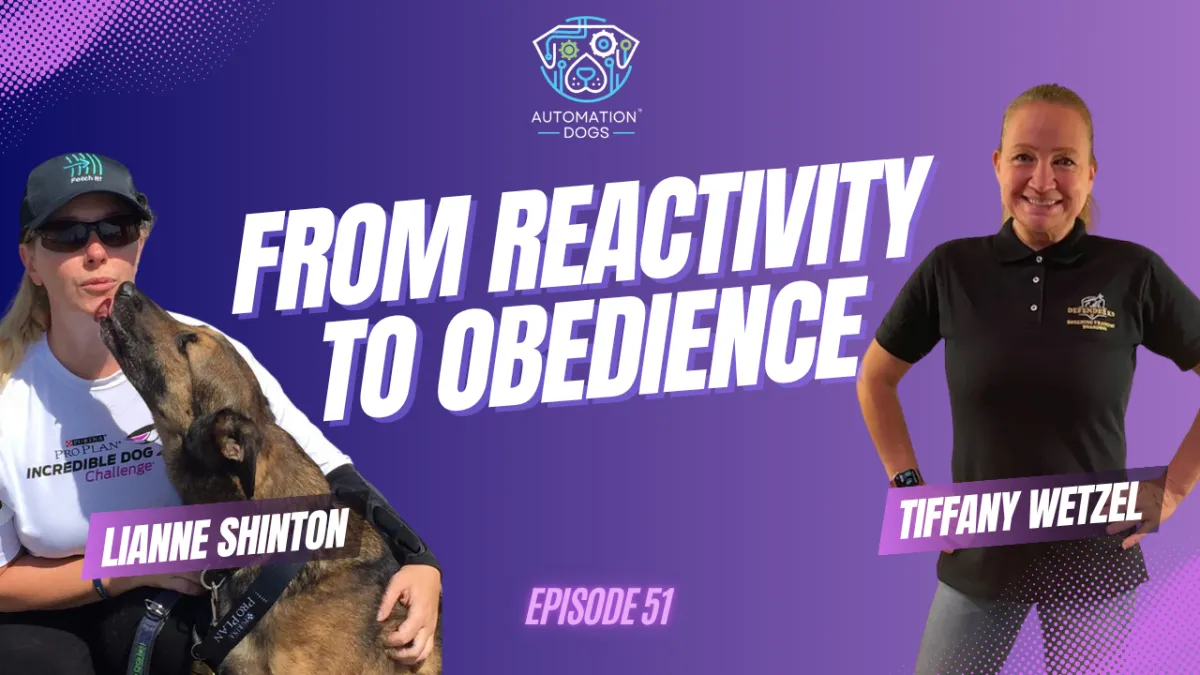
About this episode
In this engaging conversation, Lianne Shinton interviews Tiffany Wetzel from Defender K9, exploring Tiffany's journey into dog training, the establishment of her business, and the various services offered. They discuss the importance of obedience training, the role of play in learning, and the significance of commands like recall and place.
“If your dog’s not listening to you, stop feeding them out of the bowl.”
— Tiffany Wetzel
Let’s Build Your Growth Plan
Automation Dogs isn’t just software — it’s a sales growth system backed by strategy, coaching, and support.
On your free Strategy Call, we’ll:
Pinpoint where your leads are slipping through the cracks
Show you how to fix your follow-up and close more clients
Map out a simple, proven plan to grow your business
Every dog training business is different — this call ensures the strategy fits your business, not a generic template.
If it’s a fit, we’ll show you exactly how we’d implement this for you.
If not, you’ll still leave with clarity on what’s holding your sales back.
Full conversation
Transcript
Lianne Shinton (00:00)
welcome everybody. I'm Lianne Shinton from Automation Dogs and I run a software CRM for dog trainers and my podcast, I talk to dog trainers and professionals in the pet industry. Today, I'm so excited because Tiffany Wetzel is here from Defender Canine. Welcome Tiffany.
Tiffany (00:21)
Hi, how are you?
Lianne Shinton (00:22)
I'm very good, how are you?
Tiffany (00:24)
I am well, thank you.
Lianne Shinton (00:26)
Fantastic to hear. And I'm excited to interview you today because I want to kind of know what's going on over there at Defender Canine, how you came up with Defender Canine, how you got into dogs, all that kind of stuff. And just a little backstory, I did meet Tiffany in Ohio recently because she was speaking at the Professional Canine Development Conference, which was outstanding. And the subject was on reactivity in dogs. And she's
speaking to other professional dog trainers on that level. So we might dive in and might ask you a few questions about reactivity because I'm sure local pet owners would also benefit from hearing. Cool. So again, welcome. I'm so excited to have you here. You ⁓ are just such an inspiration in the dog training world. Could you share a little bit about how you got into dogs?
Tiffany (01:06)
Uh-huh.
Yeah, I'm sure. it was actually my husband is a firefighter and when the kids grew up and left, is he works every third day. So he's 24 on 48 off regular firefighter schedule. And I thought, you know what? I don't have anybody here with me anymore. I need a dog. And he goes, he didn't want a dog. They said, you're going to get a dog. You're not going to get a small dog. You're going to get a big dog. So I told him and he's black is his color. I said, I want a black German Shepherd.
So here's the caveat to that. He didn't know they existed. And he told me, he said, if you can find a black German shepherd, I will let you have one. about three months went by and he said, found my black German shepherd. So that's actually how it started. It started literally a little over 10 years ago with our very first shepherd. She's all black German shepherd. Her name was Storm.
Lianne Shinton (02:00)
Cool. ⁓
Tiffany (02:17)
⁓ And then from there it went well, we've got this German Shepherd. We need to train her. So at that time I wasn't thinking about dog training. I wasn't thinking anywhere near along those lines. I was just thinking, okay, I've got this dog. I need to train this dog. So we hooked up with a trainer and it was just something that I didn't do a board and train with her, but we actually trained her. So it was a real long process. then I got to thinking, well, you know what? There are some things that they're doing that I maybe
not necessarily agree with, ⁓ you know, towards the end. And I thought, you know what, I think I can do this. And that's actually how the whole idea started. You know, several, you know, several, a couple of years, you know, after that passed and then I ⁓ signed up for my first school and I have two diplomas for master trainers. So not that I needed to, but each school taught something different. They taught something valuable and I,
Lianne Shinton (03:16)
Hmm.
Tiffany (03:17)
just got so much from both schools. ⁓ So yeah, and here I am several years down the road with more dogs and my own business and it all started from that one dog.
Lianne Shinton (03:31)
That's awesome. Yeah, I came from a firefighter family as well. So thank you to your husband for doing that great work.
Tiffany (03:39)
then you know the schedule.
Lianne Shinton (03:41)
Yes, I do. do.
And yep, yep. Glad you got your German Shepherd. And does Todd work with you in your business?
Tiffany (03:50)
he does actually, I always tell people he's literally the glue that makes the business run. He is my maintenance. He actually helps me, you know, he cleans out the kennels for me. He sometimes will rotate dogs. If I'm in the middle of training other dogs, anything that I need done, he does anything that I need built. ⁓ he built, actually built our outside kennels. He built the utility yard that has the dog walk, the A frames, all of that in there. ⁓ so he's just anything that I ask him.
He just, you know, will gladly, most of the time not grumble, but you know, he'll, you know, he'll just do it. Like I said, I can't do it without him.
Lianne Shinton (04:29)
Totally get that, totally get that. Awesome. And then how did you come up with the name Defender K9?
Tiffany (04:36)
Alright, so this is more of a another weird type situation where when I decided that I wanted to go into business, my husband and talked about it because starting a business is not cheap. It's not something that you can't start up without money. So I needed to come up with a name that my husband was on board with also. Fluffy's Four Paws would just would not have cut it for him.
know, sprinkles on the lawn, nothing like that. All those were really cute, but I had to come up with something that he also was on board with. So we came up with the name of Defender K9, but then I had the added pressure of coming up with a logo that didn't scream working dog, but all dogs.
So, you because the majority of what I do is actually obedience for dogs, but I didn't want, you know, that name to, you know, for people to think, hey, she only does a certain kind of dog. So then I had to come up with a logo that sort of kind of encompassed all dogs that would work with that name.
Lianne Shinton (05:48)
totally get it. Totally get it. I love your logo. It's fantastic. So let's talk about, you mentioned that you do a lot of like local obedience, probably behavior problem solving locally. Where first, where is Defender K9 located? Tell us a bit about city and kind of your service area.
Tiffany (05:52)
Thank you.
Sure, so we are in London, Ohio, which is just west of Columbus and I I do ⁓ People from my clients are from they're from Dublin. They're from Worthington. They're from Westerville I've got some in Springfield, you know, I've got them quite a long ways out, know, you know around me at least You anywhere within a 40 mile range around me You know that come and bring their dogs to me. So
So those are the areas that I normally service. I did have a call all the way from Akron, on a service dog question and added training. And then I actually got another call up in Trumbull County, which is about three and a half hours away. So I reach people all over.
Lianne Shinton (06:58)
Wow.
And your facility looks awesome. I see on your website the pictures of it. It looks fantastic.
Tiffany (07:08)
Yep, have a I love it because I have a big indoor space so weather is not an issue. So if it's raining it can happen just like last week here in Ohio. I don't know about where you were, but here in Ohio last week it was very cold when you know we had wind chills down below the below zeros and then you know there's a couple days where it would just rain. I mean just like constantly. So the indoor facility allows me to work whether you know doesn't matter what the season is or what the weather is doing.
Lianne Shinton (07:12)
Nice.
Tiffany (07:37)
I can still work the dogs and it's great for like beginners when we want like a non-distraction we have you know like a dog that just cannot do distraction yet so it's great for that.
Lianne Shinton (07:48)
Perfect. Yeah, I love having an indoor facility. so right now it's freezing cold like all over. It's cold here. I'm in Kansas. So would that be a way for folks to enroll and get something going, like get active with their dogs because they can do that in your facility?
Tiffany (08:11)
Yeah, so like just for example right now I have a board and train that is here for obedience ⁓ Usually after the first five six days and they and they got their ⁓ obedience verbal and hand signal pretty much down then we move to the equipment so we bring the equipment and we do a tunnel we do platforms we do hoops, you know just all inside Inside the building because not right now. I have them on the outside in a yard
but I have portable ones that I can bring in for weather like this. You know, we get the dogs moving, we get them up, we get them jumping around and that way, you know, it's not just me telling the dog, sit down, stay, go over there, place, come here. You know, so it's not that we actually, at one point after the dog understands the command, we actually start playing with the dog. So they're doing their commands and they're learning all of it, but they're learning it through play.
Lianne Shinton (09:04)
Nice. And so the equipment, I assume that the dogs are climbing on the equipment building confidence. Could you share a little bit about the value of using some of that equipment for helping them learn and.
Tiffany (09:18)
Oh sure, absolutely. Equipment I think is so important when you're training a dog just because of the confidence level. So when we take dogs across the dog walk or we take them through a tunnel or we get them oriented to the teeter totter, we're not just doing it just because these are the things that agility would teach them. We're doing it for the confidence. They're on a different surface, they're on an elevated surface, the surface is moving, the surface feels different. So you know, so it's not just
grass. It's not just concrete. It's not just gravel. You know, we put different surfaces in there. Sometimes we put a tarp out that makes sounds when they move. And this is just all confidence and exposure, you know, to their environmentals that just, you know, make the, you know, make the dog more confident in what they're doing, you know, in their environment. So it's really, really important whether you're playing or whether you're actually teaching agility. It's just really important for them.
Lianne Shinton (10:12)
Yeah, I just want to dive into that a little bit because I think there's a lot of people that reach out and they're like, I don't know, I have this great dog and I want to do agility with them, but they don't realize, ⁓ my gosh, there's so much running and it's hard. But just using agility equipment, there's so much great value there, but they don't have to get crazy and learn all the techniques.
Tiffany (10:34)
Right, no. So I teach group lessons on Thursday at a ⁓ resort. called Bentley's Possum Resort. So every Thursday I go there and I teach group lessons. So last Thursday we had our graduation. On every graduation night, it's an eight week class. on every week of every class, I always bring in some of this equipment. And the reason I do it are for two reasons. One, so we can introduce the dogs too. The dogs can play. The dogs can have
good time. Some dogs run right up and they love it. Other dogs you have to coax up. You know what mean? You have to go through the whole introduction slowly to the equipment. But at the same time, I'm telling these owners, this is mental stimulation for your dog. This isn't just put them out in the backyard so they can run because that does not mentally stimulate them at all. ⁓ But here they have to jump through the hoop. They have to get on here. You're telling them to sit. You're telling them to down. They're using their mind. And another reason why you bring it is because I show them
all that stuff, all that agility equipment my husband made. Now, it is ⁓ regulated to what AKC standards say it needs to be regulated to, but it's all stuff that they can actually make in their home with the stuff they already have that they can do with their dogs at home to mentally stimulate them. I mean, there's a lesson in everything that I do.
Lianne Shinton (11:58)
Yeah, and you know, there's a lot of puppies. I mean, everybody can envision like a puppy and they see stairs for the first time or you have to get in a vehicle. And so I, you know, know there's Carrie over there that will help them in their day to day life.
Tiffany (12:13)
Right. You would be surprised how many puppies have never seen stairs if they live in a house that has a ranch and they just simply don't know how to go up them. We live in a ranch. We do have a basement, but when my dogs were puppies, I had literally take them and show them how to, they had no idea what to do. So I mean, all of that. then you show them once and they've got it. And then after that, they've got it. That's that confidence building that we were talking about.
Lianne Shinton (12:42)
And you mentioned that you incorporate play into your training. Could you elaborate on where you were going there? Because I'd love to hear more.
Tiffany (12:50)
yeah, sure.
So when a dog is playing, that means they're engaged. A lot of times, if you're just gonna do an obedience session, you say, he'll sit down, you know what mean? The dog is doing it, and they might be doing it perfectly, but they're not engaged in it. ⁓ When you play, your movement changes, your voice changes, your attitude toward what they're doing changes, so therefore, they can't help but change their attitude towards you. ⁓
Sometimes when we're doing play, and play is great for impulse control too. So if you're saying sit down, stop, stay, but you're running around, the dog really wants to get going and start playing with you. Say, I'll stay, and they're holding back, and they're holding back, and I mean, that's an active engagement.
Lianne Shinton (13:38)
So, and make sure I understand maybe a real life scenario when my dog's excited and they're at the park and they're all fired up, I could maybe slide some of those sits downs and they'll be able to listen while they're in that excited state of mind.
Tiffany (13:53)
Yep, is one of the reasons that we do it and we also, like during my board training, we also proof them out in those environments. So just because your dog can do it in the facility doesn't mean that you can step out of the facility on the sidewalk and have your dog do that exact same movement because you're gonna set yourself up and the dog for failure. Not that the dog forgot what he was supposed to do, he just needs that little one-on-one focus again. I need to refocus, okay, so I still have to listen to you out here? Okay, I can do that.
And then when we take them to the store, wait a I still have to listen to you? Okay, I can do that. But I mean, so you're kind of refocusing, you're not necessarily reteaching, but you're just refocusing in each environment so the dog knows, I've got to listen to you no matter where I'm at. And, know, obedience and things like that is a great way to bring a dog back down. I mean, if they're really high in energy. And another thing that you can do is lower your energy. So our dogs mimic our energy.
You know, if sitting, if we're curled up on a chair with a book sitting there, the dog's usually curled up at your feet. But I mean, if you're up jumping around running here and running there, so is your dog. So, you know, if you want your dog to settle down, you know, check, check your energy level and then, and then yeah, I mean, just, you know, force them to refocus on you and that'll bring them down too.
Lianne Shinton (15:11)
Wow, that was really powerful what you just said there. And it's interesting, because the other day I had someone say to me, because I'm not the most confident person and I don't love confrontation. So the suggestion was you should watch more like Gordon Ramsay or like Bar Rescue or one of those, you know, kind of bro shows that you start to mirror the behaviors and
Tiffany (15:34)
Yeah. ⁓
Lianne Shinton (15:36)
It just made me think of what you were describing there. That was really well said.
Tiffany (15:41)
Yes, no, your dogs do that too.
Lianne Shinton (15:43)
Yes.
Now you mentioned kind of a buzzword in dog training that was born and trained. Could you explain for anyone listening that might not know what a born and trained is?
Tiffany (15:55)
Sure, a boarding train is where we will ⁓ intake a dog and the dog will stay with us for a specific amount of time. ⁓ My usual boarding trains are two weeks. And that's just for basic on leash obedience, but they get proofed off site. They get intro'd to place. Now as a trainer, I don't consider a dog trained on place until he can stay there for half an hour with distractions, with high distractions. ⁓
So what we do is we introduce that concept to him. ⁓ We start introducing the recall. The recall is one of those where it takes a little bit time. If somebody says, hey, I can give you a recall in three days if I work with your dog five minutes a day, run from that person, because it's just not true. Recall takes, it's a relationship. takes work. ⁓ So we don't get there overnight, although you can get quite far with dogs overnight. You can't get that far from them.
So our board and trains are usually two weeks. I do occasionally do a four week one or a six week one with a behavior issue, like a reactivity or an aggression or something that I need to work out of the dog. So those will be like a longer board and train. But in there, they'll do their basic obedience on leash, meaning they will be reliable on leash. ⁓ What I generally tell people is they want too much too fast.
and they'll start giving their dogs commands for an on leash only training. you know, I have to say, well, back up. If your dog is not listening and will not listen to you on leash, they will not listen to you off leash. And just because your dog's listening to me, doesn't mean that they're going to listen to you. They understand they have to listen to me. Before, you know, if the dog's one year, two year, three year, four year, however old the dog is, it's had that much time to practice not listening.
to you, however long you've had the dog. So now it's a teaching moment that you're going to have to say from here on out, this is how it's going to be to get that level of relationship. So yeah, so those are the board and trains. They come to me. They stay with me the entire time. Through the board and train, I do not allow the owners to come back, just to visit with their dog because the dog doesn't really fare because the dog doesn't understand.
Lianne Shinton (17:51)
Mm.
Tiffany (18:19)
why they're not going home with the owner. So what I do is I videotape every one of my training sessions and then every couple of days I'll send a clip to the owner saying, hey, this is where your dog's at. This is what we're learning now because I think that's important for them to stay engaged the entire time even though they're not with the dog. And that just builds them up, builds them up, builds that excitement for when they do pick them up.
Lianne Shinton (18:38)
Mm-hmm.
Tiffany (18:42)
They're like, yeah, I really want to, know, we're going to change. This is what's going to happen. We're going to go for a walk at this time. We're going to give the dog a routine, which the dogs never had before, you know, that type of thing for our boarding for our boarding trains. So yeah, it's really all depends on what you want. Like our, you know, our six week one would even be an off leash. So we do the on leash to the off leash with a, with a solid recall in a solid place. Just in two weeks, I can't get that far.
Lianne Shinton (19:12)
You know, something you said about sending the dog's owner the video of you working with the dog comes back to what we were just talking about, about mirroring behavior. And that would be something that I would, you know, if I had my dog flirty with you and you sent me videos, I'd be like, I'm going to be like studying these so that I can learn Tiffany's movements and timing and things, even if it's just a little video.
so that it helps me when I'm put back into the picture with my dog.
Tiffany (19:43)
Yeah,
and that's actually another reason why I do it. So they have that resource. It's like, well, how did she get them to go down? What hand signal did she use? And it's all in those videos that I send. So I mean, each one of the commands that we do is detailed in those videos. And then we do one where we're just doing one command, then we add another command, now we're just doing, we're doing those all together pretty soon. The dog's doing five, six, seven commands all at once.
Lianne Shinton (19:47)
Wow.
Tiffany (20:11)
and hey, do this, do this, do this, and the dog's just responding. And I think that's kind of eye-opening for the owners.
Lianne Shinton (20:21)
Definitely. Yes.
Tiffany (20:21)
So yeah, yeah. And then we do when
we, then with those boarding trains, I also offer, depending on how long they are, anywhere from four to sometimes I do unlimited, depending on what kind of behavior modification that I'm doing, private lesson followups on that. And then those, so I do the boarding train, I teach the dog, I educate the dog. And those followups, I'm educating the owner. So it's twofold.
Lianne Shinton (20:50)
makes perfect sense, transferring the training to the owner through those follow-up lessons.
Tiffany (20:54)
Yes, yes. One thing that
I absolutely make sure of when they leave is do you know how to this dog accountable? Don't give the dog command that you're not your, that you cannot or you refuse to force. Don't do it. Bad things happen.
Lianne Shinton (21:05)
Mmm.
Yeah, yeah, inconsistency. Now, you mentioned a couple words when you were talking about the board and train, and one was place, and the other was recall. And I just wanted to maybe have you elaborate a little bit on how those are so valuable. Obviously, place, you know, around the house, things like that, when you're watching TV, when you're eating, and then the recall, which is the come command.
but just to let folks know how that incorporates into your training and how important those are.
Tiffany (21:42)
⁓ I think as a trainer, most trainers will tell you those are probably two of the most important commands you can give your dog. mean before sit, down, stay, before any of those, a solid recall and a place command. A solid recall can save your dog's life. I mean if you live like in a like a suburb or you know on the street, know like close to the street and your dog's running and there's a car coming.
Lianne Shinton (21:59)
Mm-hmm.
Tiffany (22:07)
If you can turn that dog around or have that dog drop where he is, that can save his life. And then, know, the place is wonderful because the place just makes your life so much easier. You know, the dog knows how to go to the place, the doorbell rings, the dog goes to place. Somebody comes in, the dog goes to place. You're eating, the dog's not sitting there begging for food, they're on their place. So that literally will just make your life so much easier, but the recall can actually save their life. So I think those are probably two.
of the most important commands that you can give any dog.
Lianne Shinton (22:38)
agreed, agreed, you use them on a daily basis. Whereas I could go months and I'm like, I don't even think I've told flirty to sit at all. it's but place and the come command daily.
Tiffany (22:42)
Mm-hmm
Right.
Lianne Shinton (22:54)
Fantastic. Now, I did want to pick your brain a little bit about reactivity. So let's say somebody listening now has, I know you love all the breeds, but you've got German Shepherds as like kind of your starting breed. So let's say somebody's at home right now with a German Shepherd, maybe describe reactivity and share a little bit about your insight on what they need to hear from you.
Tiffany (23:21)
Sure. So, reactivity is... You really need to get to the bottom of reactivity. So, first of all, you know, if we can understand why a dog is reactive and we can pinpoint a trigger of what the dog, what makes that dog reactive, then reactivity is actually an easy fix. Most of the time, we don't know that because something could have happened to the dog that you have absolutely no idea.
So you're trying to piece this together and you're like, nothing happened to the dog. Well, while you are walking the dog and paying attention to something else, maybe another dog, not even making contact, know what I mean, scared your dog. Maybe they were in a fear period. You know what I mean? you know, maybe, you know, they just, you know, it just, they just, they just took it wrong. You know what I mean? And scared, I mean, you did a little backflip and you're like, no, no, come on. And you didn't understand the extent of just what went on in that interaction.
that can be reactivity. Reactivity can lead to aggression. As a matter of fact, a lot of times, if your dog did reactivity, that's one step closer to aggression. And reactivity doesn't get better. It only gets worse. It's just like anything else. If you have a problem, it never gets better. If you don't do anything about it, it only gets worse. ⁓ So the first thing I tell people to do, of course, is stay out of the dog parks. Just stay out of them. There are some times where I will send, if the dog is working on dog.
Lianne Shinton (24:31)
Mm-hmm.
Tiffany (24:46)
the dog on dog reactivity type work, then I will tell them to go to a dog park. I said, you're on the outside of that fence. You're working your dog where all the commotion is, but you're not stepping foot inside that dog park. Unfortunately, all it takes is just one. It takes one incident to ⁓ create such a behavior issue or reactivity or anxiety in your dog.
that you're spending thousands of dollars now working that back out. And just because you want your dog to be around other dogs, that needs to come into a controlled situation where you know the temperament of that other dog. And then if you want those dogs to interact, ⁓ A lot of times we give our dogs reactivity and we don't even realize it. The majority of dogs that are reactive
Lianne Shinton (25:16)
Mm-hmm.
Mm-hmm.
Tiffany (25:40)
It's
on us, it's on their owners. ⁓ Because of this little thing called socialization. So socialization to me and you means, we need to interact, we need to mingle, we need to go talk to people and be up in their space and that's what it means to humans. Not so with dogs. A socialization ⁓ exercise with a dog is having two dogs in a room, both on leash noticing the other dogs over there. That's socialization. That's really, you know, the...
They don't need to mingle. They don't need to go over and see every single dog. Now understand that there are those friendly breeds that really want that for the most part. And if we're talking German Shepherds, German Shepherds are naturally suspicious anyways. They're not exactly the golden retrievers that, hey, I want to be friends with everybody. They're introverts. They're not the... As a general rule of thumb, now I have seen some pretty...
laid back and friendly German Shepherds too. But for the most part, you know what mean? Those are the, they're just, they suspect everybody. ⁓ But like I said though, we give our dogs reactivity issues because we go to socialize them. We don't understand what the dog needs in socialization. And when we create the fear, we create the nervousness and we create the anxiety that's now coming out in their behavior some other way.
So yeah, so reactivity, deal a lot with reactivity.
Lianne Shinton (27:06)
Yeah, a lot to unpack there. One thing that stood out to me was that you have to be observant to what is going on around you. And I know for me as a dog trainer, if I'm walking, I'm always like on guard. I'm sure you are too. ⁓ Now I went for a walk one day with my mom and she was visiting and she's walking along and she's like,
Tiffany (27:26)
Perfect. Yep.
Lianne Shinton (27:35)
Did you see those purple flowers?
I saw that dog over there that was looking at Flirty the wrong way. Did you see that? No idea. But it's just like kind of what's in your head, like what you focus on, what's part of your world. But sometimes we as humans might need to be a little bit more careful about our surroundings. ⁓ My mom will almost always just walk through like a ⁓ gang or something. And I'm like, mom, what are you doing? Where are going?
Tiffany (27:40)
You
Lianne Shinton (28:07)
but just not really careful about her environment. But me on the other hand, I am very cautious. I always wanna protect my precious angel. That being said though, when you are saying sometimes we inadvertently like, you know, cause reactivity, I also have to be careful of that. So I'm not like tightening up on the leash and getting weird. So flirty picks up on that stuff.
Tiffany (28:32)
Right, and I have had actually recently a couple of ⁓ reactivity leash, you dog on dog or dog on people reactivity that when I got them to my facility, I really didn't see that issue. And it was because I wasn't looking for a problem when I took them out. I am working right now with a dog on dog reactivity to where it turns into aggression if the dog gets to the other dog. And ⁓ right now she is probably
I would say at a 15 maybe percent reaction rate other than that, there is no reaction. When I'm taking her near dogs or even in the vicinity of dogs, when her owner had her, she screams. mean, if you've never heard a dog scream, it's pretty powerful. And I think a lot of the reason is because I'm working her. If there's going to be a problem, I'm not embarrassed about it.
because I think a lot of owners, get embarrassed when their dogs are reactive, especially to other dogs where they get to the end of the leash and they lunge and they bark and they're out of control. the owners are trying to back up and trying to control this leash of this out of control dog. And it is, it's embarrassing. It's like, well, I can't even control my own dog. And I think for me, the reason that I don't get such a reaction from them is because one, I'm not looking for it or two, I'm ready for it. I'm just like, if you're gonna react, this is what we're gonna do.
Lianne Shinton (29:34)
Hmm.
Tiffany (29:59)
You know what I mean? So my emotion is out of it. Emotions are something that cause reactivity because dog's noses are so powerful that every time that we have an emotion, whether it's fear, whether it's nervousness, anxiety, frustration, you're mad, any kind of emotion we have, we drop a pheromone. And each one of those have a different pheromone. So when you say, my dog can pinpoint my mood, they really can. And what they're seeing is,
you're like, oh gosh, here it comes, here it comes. I don't want her to act like that. And all of a sudden you are flooding them with, I am so nervous. I don't even think that I can breathe right now. And then the dog is like, oh, my person's nervous. I need to be nervous. I need to be alert. need to, know, I need to be, there's something to be, there's something to worry about here. And so, yeah, so a lot of times we inadvertently cause the reactivity, you know, not just because we don't know how to socialize right, but then we, you know.
Lianne Shinton (30:39)
Mmm.
Tiffany (30:56)
because we put them in situations where they shouldn't be in, and then we don't know how to get them back out of the situation. So sometimes we lose trust with our animal. And when you see a dog that is reactive to another dog or reactive to a person, and they're not listening to their owner, really what you're seeing is a dog that don't believe that their owner can handle it. So they have to handle it. So it's all relationships, it's relationship.
Lianne Shinton (31:21)
Yeah.
Tiffany (31:25)
And that's where, you know what mean, that we need to start fixing it at the relationship level.
Lianne Shinton (31:31)
Very interesting, very interesting. Socialization, you've mentioned that word a few times and talked about interactive socialization versus maybe non-interactive socialization where you're still socializing, but the dog, the other dog's over there, my dog's here, we're kind of socializing, but we're not interacting about it. Could you expand a little bit more on all of that good stuff? Because
Tiffany (31:54)
Hehe!
Lianne Shinton (31:59)
I think there's a lot of confusion, like you said, about socialization and just that word means our dog has to interact.
Tiffany (32:06)
Sure, so socialization is basically, when you're talking about a dog and a dog's point of view, socialization is just exposure. You're not interacting, you're not intertwining, you're not coming up and meeting them nose to nose or whatever. Now some dogs, yes, you have a neighbor and their dogs need to get along, if you have other dogs in your house, I mean I have five dogs, play with each other, they don't play with any other dogs, they play with each other, ⁓ but socialization,
for a dog just means exposure. Exposure just means being able to see it. ⁓ When we talk about in behavior modification we talk or behavior modification we talk about desensitization. All desensitization is is getting them used to something. So if I had a dog that was afraid of this water bottle you know depending on the severity of it that water bottle might sit like on the floor in the corner of the room just there not moving it's just there.
You know, the dog at first may flip out because his water bottle's there. You know, but we keep the water bottle there and we keep exposing him, exposing him. I mean, we don't run them up to the water bottle. You know, our exposure may be, you know, at such of a distance that the dog can handle it. Because reactivity is a funny thing. So think of it like your bullseye, right? So the outer or the very, very middle ring, that is no learning has taken place at all because that's the comfort zone.
That is their absolute comfort zone. They know they are safe and they are not learning. Even if they can see what they normally would act to off in the distance, they're still in their comfort zone. No learning takes place. So the next ring of the bullseye, right? That's their alert zone. This is where, wait a minute. They're getting a little bit closer. I'm noticing this, I'm noticing that. They might start prancing, you know what I mean? They might start keep looking over, but they're still able to, if you tell them to sit, they can sit. Do you say here? They can say here or they can come here.
If you say, come on, let's go, they can start walking with you. So then that's the middle section of your bullseye. The outer section of your bullseye through the middle to the middle to the outer, that's your threshold. Once they are over that threshold, that is reactivity and learning all learning stops. We do not want to keep a dog over the threshold any longer than we absolutely have to. I say three to five seconds, get them out of that threshold because every second that they're in there,
That's just more and more time that they have on this learned behavior that they're doing, on this reactivity that they're doing. ⁓ Not really learn behavior, but reactivity is just reaction. But we don't want them there. Three or five seconds sets it, back them back up, get them under control. And then you know where your threshold is, now you know your working zone. So now we can really start working that dog in reactivity.
without getting too close. So go back to your water bottle. Water bottle's here, we start way over here. If it's every day or if it's throughout the day, depending on the severity of the dog, this might take a week for a dog to even come near this water bottle. And if another dog, they might not like it the first time, but the first second time you introduce it to them, okay, fine, it's my best now. So it all depends on the severity of the reactivity. We go at the dog's speed.
The dog tells us how far that we want to go. We can't push the dog. If we push too far too fast, we'll lose what we've gained and then we'll have to start back up and start all over with.
Lianne Shinton (35:24)
Mmm.
Yeah, it kind of got me thinking about when we pick a route where we're going to walk our dogs and I always choose a safe route and I have to stick to my route because I want to make sure I don't run into off-leash dogs or trouble. So if I really wasn't cognitive of picking a safe route for my dog and every day I'm walking past maybe a house where dogs come running out and attack the fence and my dog's getting activated by that.
Tiffany (35:47)
Uh-huh.
Lianne Shinton (36:02)
Every time I go past, it's just building and building. If I just cross the street and walk this way, I could be avoiding getting so close and creating such a problem. And that's where I think people just are like, but I just walked past here. He just, he just does it. I'm not sure. He's just a bad dog. ⁓ but we have choices of routes that we can take. And that's what I'm kind of hearing, like in your threshold, like people could be making moves now.
to at least avoid getting right into that threshold.
Tiffany (36:33)
Yes, yes.
So you have to be careful right there because we don't want to avoid our whole life. We do expose him, but you don't have to expose them up close and personal on the first day. But I mean, but the more you expose him to that, the better he's able to handle that. know, so, you dogs learn through repetition. They are conceptual place learners. What they're going to learn is they're learning in that moment. So when we tell a dog that they're doing something right, we have to tell them literally within 1.5 seconds.
Lianne Shinton (36:39)
Yeah, that's where you need Tiffany. ⁓
Yeah.
Tiffany (37:03)
you know, that's our yes word, that's our clicker, that's our, you know, we click, we say yes, that's exactly what I want you to do. Then you can go and get the treat and give it to me. You don't have to, you know, have the treat ready right there because we don't want to treat dependent dogs, but you can really actually work with, you know, even if it's across the street, all those dogs are over there, you know, yipping and yelling and, know, and doing whatever it is that they want to do, you know I mean? And then you can actually start, you know, bringing the dog closer and closer.
So the dog learns just how to ignore that. They're jumping on the fence, going crazy. And you could just say, come on, let's go. Pretty soon your dog will be able to actually walk past that. yeah, so redirection is something of what you were talking about. It's great, but it's a band-aid. So depending on what the reactivity is. Now you could have something that is so minute that a simple redirection, that will work. I'm talking about cases that are really severe that it's
Lianne Shinton (37:47)
Mmm.
Tiffany (37:59)
that it's not necessarily impairing the functions in their life, but it's really reducing the quality of things that this dog can be doing because they have so much fear, so much anxiety, ⁓ so much mistrust that if we could patch that, then the quality of their life would just skyrocket.
Lianne Shinton (38:06)
Yeah.
Yeah, so there's a lot of hope here for folks that are experiencing reactivity with their dog. If you want to find a solution for that, call Tiffany. Now, maybe you could share Tiffany a little bit about when people reach out, what that process looks like so that they can talk to you and figure out the best course of action to help them with their situation.
Tiffany (38:49)
Sure, so there's a couple different ways that you're able to get a hold of me. ⁓ I've got my business phone, you can call me on the business phone. Are we going to put ⁓ that information up on here? Okay, ⁓ so you can call me on the business phone, you can email me, or I do have a submission form on my website that clients can fill out.
Lianne Shinton (39:04)
Yes.
Tiffany (39:16)
give me a little bit of a rundown of what they're needing, what type of service that they're needing. ⁓ And then what happens at that point is I will contact you. will basically, talk on the phone for a little bit. get a little bit more information and then I will schedule a consultation. Now the consultations are free. What they do is they come in, I actually get to meet the dog. I talk with you a little bit more. We fill out an observation form with the dog and then you actually view ⁓ my
facility because I think it's really important that if you're gonna leave your dog with me that you know where one you're leaving your dog and Two what that dog's days gonna be like, you know, is he gonna be in you know in a kennel? Yes, he's gonna be in the kennel. Is he gonna be in the kennel 24 hours? No, that dog is up and out of that kennel so often throughout the day No, they never just sit in there and that way sometimes when you explain that to somebody it's A picture is worth a thousand words. So when they come in I can say hey, this is where he's you know, we'll where he'll be out
during the day when I'm working with them. He gets a big break, he goes out to the big door towels that have their own private runs and then we do our confidence building portion of the training. This is the yard that we do it in and then ⁓ I have him sign a waiver to where I'm gonna take them off site. Now I'm taking them to parks, I'm taking them to stores, I'm taking them to bike trails. Just to make sure that they understand that wherever the environment takes them, they still have to ⁓ listen to me.
⁓ But I mean, so we do all of that and then at that particular meeting, if they still want to go ahead, then we schedule. And then after that, they just, you they come and they drop the dog off. At the end of their stay, whether it's a two, four, six, whatever week's stay, I usually will walk off about an hour to an hour and a half to where we do a go home lesson. So I take a video of what they were doing in the beginning.
and what they were doing the morning of, their last day with me. And then we actually put them side by side in the comparison. And then we show the owner, this is what he was doing, this is what he can do now. So when you ask him to sit and he doesn't do it, this dog can do it. He needs held accountable. He just doesn't realize that he has to do it for you, but he will, right? So then we go through, this is how you're gonna get him to move.
Lianne Shinton (41:10)
Mmm.
Mm.
Tiffany (41:37)
Just like with the automatic sit they come to the sit and most clients they'll take the leash and they'll kind of like guide them back And then I'll have to say don't guide them back set them up again Tell him to heal go ten steps I said and just come to your stop and wait for him to do it and then when they do it Everybody is so amazed I said he knows what he's doing allow him that chance to show you that he knows what he's doing You know and then another thing that I always tell them is you know don't expect just because you brought your dog to a trainer
you know, any trainer, me, anybody, just because you brought your dog to a trainer and this is, you you're looking at this video and this dog can do anything, right? All these commands that we said we were gonna get this dog to do, he can do them on cue, he can do them on only hand signal, only verbal, doing great. That doesn't mean it's gonna make him a good dog in your house. You know, just because he does it here, when he goes home, he doesn't understand that he has to do it there too, so there's a little bit of effort on their part.
Lianne Shinton (42:26)
Mm.
Tiffany (42:34)
⁓ you know about You know what their expectations are so I always tell them you know this isn't a one-and-done He's not coming here. You know basically I'm teaching him how to start reading you're gonna finish that at home You know throughout you know throughout your daily process of how you expect that dog to act and it's kind of like a toddler You know you're they're not supposed to have the pen go over take the pen off of them You know if they're chewing on something they're not supposed to have no not that this you know it's still that process
⁓ But yeah, and then that's you know for the board and trains. That's that's generally what we do We do private lessons for those individuals that really want to work with their dogs I generally don't recommend private lessons because for people that Don't really want to you know work with their job But it's kind of like they think it's a cheaper version by the second private lesson. They're like, okay We're not moving fast enough. So in a private lesson, I don't actually teach the dog. I teach you
how to train your dog. And you know, sometimes that doesn't move fast enough for them. Now I do have one that is, I just took a bulldog on an eight week private lesson program. Yeah, so he is deaf and he's visually impaired. So we're working touch commands with him. So he's not a kennel recipient at all. So he comes once a week. Yep. And then, and then I do service dogs. So I can do, we do service dog tasks and, and you know, and things like that. So we, mean, we do a variety.
Lianne Shinton (43:41)
cute.
Right.
Tiffany (44:01)
of services, so depending on what you would need. I've had people call, I'm an AKC evaluator for a canine, good citizen. So I can title a dog in the CGC or even trick dog. That's one of the things that I can judge so you can send into the AKC. So it really depends on what it is, what service that you're needing, depending on what that is looking like. So that was it in a nutshell.
Lianne Shinton (44:28)
Yeah, and a good starting point too for folks that maybe I want to get into service dog work with my dog or just helping with reactivity, get a good off leash trained dog. The starting point would be to go to your website and I'll just kind of read it out here so folks have it but defenderk9llc.com and the K and the nine is the letter K and the number nine llc.com. Perfect.
I just was curious about the observation form that you fill out during that consultation evaluation process. Is there lots of good questions on there?
Tiffany (45:07)
Yeah, so there basically it gives me an overview of your dog. It'll give me where you got the dog, when you got the dog, how you got the dog, because all that makes a difference in behavior. Whether there is kids in the house, whether there's other pets in the house, what the exercise looks like, the eating habits, what their method of discipline is. How do you discipline your dog? ⁓ Where they sleep. Where they sleep is a funny one because it really doesn't matter to me where they sleep.
but it tells me a lot about the owner. It tells me what kind of owner sets for the dog. So that's actually why that's on there. So I think it's a very important question. And then we go into all about the dog. Is he reactive to people? Is he reactive to dog? Does he have trouble jumping? Is he an excessive chewer? Does he bark? All of those little, whatever you want to call them, is he aggressive? Has he ever bitten anyone? ⁓
But yeah, a lot of times these nuisance behaviors that people have, they stop when you get your dog trained. ⁓ It's only because what we do here is we break down the barrier of the communication between owner and the dog. So the dog actually starts understanding what the owner wants. And if the dog will comply, if the dog actually understands what you want that dog to do, he'll comply. Dogs are people pleasers. ⁓ Where it gets fuzzy is where the dog is unsure.
So the owner thinks the dog should know how to sit, but if they've asked him in a different way or something happens in the dog's mind where he becomes unsure, he'll start offering different behaviors, which is gonna upset the ⁓ owner because the owner thinks the dog knows how to sit. And then all of sudden now the dog's offering all these other appeasement behaviors to try to make you happy again. And it's all because of communication. So we take all of that out. We give them general manners so they don't.
pull them a leash anymore when you're walking them, which is a big one. People don't walk their dogs because their dogs walk them. So that's a huge one. So we take care of that one first, you know, first off. And the other one is like, you know, the jumping. You know, the jumping, sometimes I say, well, my dog will dig my dog, you know, my dog will chew. So we'll address those issues. ⁓ But, you know, generally, though, once you have an obedient foundation on your dog, a lot of those nuisance behaviors, ⁓ you know,
that they leave. And then one of the last things that I do with my clients when they leave is when they come to pick the dog back up, I'll ask them, know, do you understand, you know, what kind of a dog do you have? Right. And do you understand the breed specific, you know, behavioral challenges or instincts of this particular breed? So like I have a golden doodle out there and then they, well, they keep taking my socks. Well, so a golden doodle is a golden retriever and a poodle, right? So they've got
Lianne Shinton (47:32)
clean up. Yeah, they clean up.
Tiffany (48:01)
they've got qualities from both of those breeds. Well, a retriever, wants to retrieve. So, you when I ask them, you know, well, how do you satisfy his retrieval needs? And a lot of times, you know, they'll say, well, I don't know, or they'll say, well, we play ball. Well, playing ball and playing fetch, that's not retrieving. So what happens is,
they don't satisfy the retriever need in them. what what's happening is the dog is going around. to be a retriever, the dog's using his nose to go and find something. That's what the retriever does. So when you're talking about hunting, you're talking about your Labrador retriever, right? He goes finds, you know, the pheasant, whatever the hunter's hunting, picks it up, brings it back. He's finding it with his nose, not his eyes. So.
Lianne Shinton (48:41)
Mm.
Tiffany (48:54)
In these cases where you have these types of dogs and you're bringing them indoors but you don't give them the outlet to satisfy that instinct for them, then they usually will start with like socks. And one of the reasons for that is because it has the scent of the people on there. ⁓ The dog wants to be closer to the people, but he just decided, okay, then I'm use my nose, I found this, that's my prize. So a simple, hide me, here's your ball.
toss out a little bit of tall grass or whatever, I'll tell the dog to go find it. That's retrieving, not fetch. Fetch is more prey drive, driven. This is, that's retrieving. And a lot of people don't know that. So before they leave, make sure they understand what exactly kind of dog they have, what behavior is normal, because a lot of times they're like, okay, why I wanted to stop doing that? said, okay, yeah, I got a sheep dog. You understand what sheep dogs do. He herds us, he circles the kids, he does.
Do you understand what a sheepdog does? This is what you got. So a lot of times, you know, and that actually changed the relationship too, because I don't think people think about that. They think about, this is a cute dog. I want that. But they don't know the implications of breed specific behavior in DNA. So yeah, and I do, I do, just, you know, I, know, and I ask them to the point where, you know, it just, I, I, I, I make my go-home lessons very interactive so I can, you know, have them go home with as much knowledge.
And then we do four, five, six follow ups each week after that just to make sure that they're maintaining what we did.
Lianne Shinton (50:28)
Yeah, knowledge is power and it really gives them good understanding of why their dog is doing certain behaviors and, you know, help with your help to find solutions to satisfy some of those needs that the dog has. I love it. I also love that you have the observation form that you fill out and you're really triaging or asking a lot of questions and
that tells you so much as a dog trainer about what's going on with the owner and with the dog. And I love that. I just wanted to point out that, you know, if someone is looking for a dog trainer and the trainer just says, here's my programs, this is what you should do without asking any questions, that might be a red flag. Just like if I'm in the doctor's office and the doctor comes in and just gives me a pill without asking any questions or running any tests, that'd be weird. So I think
Tiffany (51:21)
Sure. Yes.
Lianne Shinton (51:23)
What you're doing is so important and for people to take note if they're considering a trainer, that would be something to make sure that the trainer does is ask a lot of questions to learn more about my dog and my situation.
Tiffany (51:37)
Sure, and every program that you do with a dog should be tailored to that dog. All dogs learn differently, all dogs. Some dogs take a little bit longer to learn a command. Some dogs can just breeze right through it. with those particular dogs that are breezing right through everything, I'll start giving them other commands that aren't even on the program. learning shouldn't stop. Learning should never stop. And I was always one of those ones where, would you ever do trick training with your dog? What is trick training and why would you do that?
Well, when I actually started trick training with my German Shepherd, I got my answer because it just the bomb that you get with your dog when you can be silly, but you're not just being silly with your dog. When you trick train your dog, they're being silly back with you. You know, I mean that that's powerful. You know, even even my type of, so I've got three German Shepherds in a Malin law and I've got a rescue little pity. She was born without her front legs. So she's basically a potato sore ouch.
Lianne Shinton (52:15)
Mm.
Tiffany (52:32)
But, I mean, don't feel sorry for her. She runs the roof. She bullies all these other dogs. But I mean, even though that I have those four high powerful dogs and half of them are in bite work, I've got two dogs that are explosive detection dogs and I've got two of them that can do man trailing. So they trail human scent. And that's another thing that we offer here at our facility. We offer those specialty.
trainings, but I mean even then they have trick dog in them just because you know you're not always working But you are always interacting with them So I mean if you know it's that you know you just they're they're not just robots you literally if you want a relationship with them you're constantly interacting with them my My one dog you know I always tell people when something happens to her come check on me. I will not be okay She is my soulmate. I told my husband. I said I'm sorry, but this dog is my soulmate
and we can talk with our eyes. I just have to look at her, she has to look at me, and we know what each other's thinking. It's great. It's great. Watch it, P-Tech on me.
Lianne Shinton (53:35)
Yeah, I have one of those. have one of those. I love the trick. Yeah, yeah,
mine just turned 10. So yeah, it's a tough, tough time having an older dog. have a 16 year old too. But I love the trick dog stuff. Super fun. I did that when my baby was a puppy. And it was just you're right, it's stuff you can do in the living room too. So when it's cold outside,
Tiffany (53:59)
Yep. Yep.
Lianne Shinton (54:03)
you know, get their minds going. Such, such fun stuff. Do you have trick dog classes or just kind of incorporated here and there in your lessons?
Tiffany (54:11)
So we are I'm actually ⁓ at the one group lessons that I teach at we know we're gonna start incorporating them there I Can teach them at my facility? ⁓ But yeah, no, those are just you know things that You know that it's just wonderful, know the you know, like, know, like the whole trick dog thing But no we can definitely teach them, you know here at the facility, you know a lot of times some of the ⁓ service dog ⁓
foundations is what we would consider, oh, my dog can do a trick. Look what my dog can do. And that's actually the foundation of a service dog animal. know, that and once your dog gets the trick, you know, like the trick portion of that, it's like, they want to be around you. You know, these dogs aren't going to wander off because they want to be around you. The first thing I tell all of my clients is two things that I tell them. If your dog's not listening to you, you know, stop feeding them out of the bowl. You know, it all comes from your hand.
they work for their food. know, I mean, they, you're still getting in their food, but you know, we're not just giving them to them. It holds more value when you feed them out of your hand. And then, you know, like I said, with the trick, it's just, you know, with the recall, those dogs, you be more, you be more exciting than anything in your environment. That dog wants to stay with you. And sometimes that's hard, but if you have that relationship with them, ⁓ but yeah, so I do trick.
training and group lessons. I can do trick training and group lessons at my facility when they're offered. ⁓ But, and then, you know, at the end of it, we say, okay, you've got, know, except depending on, know, if you're doing CGC also, the trick level, you know, how many you have to do is different. ⁓ You know, if you're only doing one versus the other, but it's like, okay, let's go ahead and do them. And then I just, I evaluate them right there. So, and then, yep, that's how that works.
Lianne Shinton (56:03)
I love the trick dog stuff. I love the CGC. I think it's so fun and good for us to have goals. And when we set a goal with our dog and say, am going to get my trick dog novice. I am going to get my CGC title. Like it motivates you to get the work done and it's our dog. know, it's, they're awesome. They're amazing creatures. And that is just such a fun way to experience them. That's easy in your living room, like tricks are.
Tiffany (56:30)
Yes.
Lianne Shinton (56:31)
Tricks are super easy and
Tiffany (56:32)
Yes.
Lianne Shinton (56:32)
fun and Flirty was playing the piano when she was like eight weeks old. It was so cute. So all the good pictures and stuff, it's just so memorable. It's such an important thing. I love it.
Tiffany (56:39)
Right?
Well,
and when you start interacting with your dog on a daily basis, I mean, they become part of your, don't see them as, you know, there's kind of a danger to that a little bit too, because you don't see them just as your dog anymore. like, you know what I mean? Oh no, they're, and they are, they are part of our family, but we have to draw the line treating them like children. We have to draw that line. I mean, we can, we can feel, you know what I mean? Oh, this is my fur baby. But I mean, the way that we treat them and interact with them.
Lianne Shinton (56:59)
Okay.
Tiffany (57:11)
We actually, going back to that reactivity, we actually cause a lot of reactivity by doing that because dogs are not people. They lack the critical thinking skills that we have. And you know, so they get nervous when we actually start treating them like a little child. They get nervous, they get anxious. That's when the nipping comes, the reactivity. Sometimes it can turn into aggression. But yes, but I mean, the relationship that you would get with your dog.
Lianne Shinton (57:27)
Mmm.
Tiffany (57:37)
through all these, you know what I mean, added little things that you're doing with them. I mean, it's phenomenal. It's out of this world. There's actually not another feeling.
Lianne Shinton (57:45)
Yeah, agreed, agreed, 100%. Could you share a little story of a transformation that you've had with a client, maybe reactivity or something else?
Tiffany (57:59)
Um, sure. I had, um, I had a dog. It was a German Shepherd. For whatever reason, I get a lot of German Shepherds. But he was a German Shepherd. Actually, was, um, she turned out to be a great friend of mine. It was one of my, not my first client, but it was, you know, very, you know, when I opened my business, it was, you know, pretty close, you know, to the first, you know, five or 10 of my clients. And he had a very, he had a lot of nervous disposition.
He was supposed to be a mobility dog, he was supposed to be a service dog. He was a 90 pound German Shepherd, which height wise, great, he had there, but he had nervousness and shyness in him. Where he would see people and he would back up, you know what I mean? And try to get behind the owner. First of all, told him I said stop using it, I said he's gonna hurt you. know, because he's the mobility dog, because the gentleman was older, he didn't have a lot of balance. Well, he had balance, but it was kind of off balance.
And so they actually, they stopped using him as the service dog, but then they brought him back here and he spent a good six, eight weeks with me. ⁓ Normally I have training facility out there. Right now I've got full kennels. But I don't normally bring dogs in my house because I've got five of my own and this is their domain. ⁓ Shadow I did, ⁓ just because that's what he particularly needed.
He was, by the time he left, he was able to walk past people, you know what I mean, without shying away. It was just, you know, just to see, you know what I mean, that confidence in him grow. I've had, I had another dog. As a of fact, going back to Shadow, he came, took him six days to decide that he was gonna have anything to do with me, six days. And then I don't know what happened, but on the sixth day, he's like, you're my person.
Lianne Shinton (59:33)
Wow.
Yeah.
Tiffany (59:54)
And then after that, was, that was all she wrote. She was just with me. But it was, so, you know, so when I, when I say that we go on the dog's time, I truly mean we go on the dog's time. ⁓ but yeah, no, just the, just to see that confidence because it's debilitating. I don't know if you've ever seen a nervous, very, very nervous dog. It's debilitating. It's no life for a dog, especially a German shepherd. I had another one that was like that too. She was, I mean, to the point where.
It was debilitating. She couldn't live. She couldn't live outside of her own little house. You know what mean? And not have anxiety and you know what I mean? And be sweating and you know, and yeah, no, and you know, and you take these dogs and you work with these dogs and you show them that there's another way. And I love the boarding trains a lot of times for that because it takes them out of their comfort zone. Now they have to figure it out. They're over here and they have to figure it out.
and then they start learning and then they start learning a little bit more and then they start doing a little bit more and it just goes more and more and more and more. And I mean, you just see the look on the dog's face, like kind of like a kid goes, I did it. And dogs have that look. If you look at a dog just at the right time, you'll see that, look what I did. type of Especially for those particular dogs. our working dogs, we treat totally different than our pet dogs.
Lianne Shinton (1:01:08)
Yep.
Tiffany (1:01:17)
they need to be able, our working dogs need to be able to handle that stress, things like that. when it comes to our personal dogs that are already fearful, we just handle that differently.
Lianne Shinton (1:01:28)
Yeah, I really love those fearful dogs. I'm helping my friend at her facility and, you know, just walking in there and having super respect that I've got to take this dog out for a walk right now and get his leash on and everything. And when they let me into their like circle of trust, I'm just like, I feel so privileged. Like those are kind of my, my favorites. think, yeah.
Tiffany (1:01:50)
Yes, yes you do.
Lianne Shinton (1:01:54)
Growing up with
chow chows, it was like, I'm in a circle of trust and I have to be careful in there.
Tiffany (1:01:59)
Yeah, yeah,
they don't. Yep. Nope, they don't. They don't trust easily. so ⁓ I do actually on my website under the our stories, I have a ⁓ two videos like comparison videos. They ⁓ there's German there was one German Shepherd. It was Cooper story on the one on my website. You know, I would say sit, he would go into a down and I mean, he was just all over the place. And then the next video is at the end of our ⁓
Lianne Shinton (1:02:06)
Yup.
Tiffany (1:02:28)
at end of our training. We had him at the park. I mean, he was just doing phenomenal. So that's actually on the website.
Lianne Shinton (1:02:34)
Nice.
I saw that there. again, folks can go to defender K9, like letter K number nine, LLC.com to see those. Great. Do you have any other programs that you guys offer that you might want to just share so that it can get on people's radar, like your pet tech program?
Tiffany (1:02:43)
Correct.
Sure. with all the training and everything we do, I offer CPR classes for dogs. So they're geared towards dogs and cats. But I do offer a full, I could do first aid and CPR, which is an eight hour course, or I can just do the CPR course in five hours. So I have that going. I usually, you know, those I go with like clinics and vets ⁓ and different boarding places, you know, to ⁓
to offer those. I've had clients and I've had people that are just pet owners go, so sometimes I'll go to the community centers and we'll offer those. I do offer a Maxwell Handler School. So I do a obedience handler school. There is a service dog handling school. I'm not doing the master program right now, which is the protection, ⁓ tracking and trailing, and the scent detection.
⁓ I don't have that actually on my books yet, but I've got the ⁓ obedience school and the service dog school already set. And then I'll add another one again the next year. The one that's coming up comes from ⁓ January 5th through like the 27th of February. So ⁓ it's, you know, eight weeks long.
Lianne Shinton (1:04:15)
Nice. I think, you know, once the snow melts and everything, you get that tracking and trailing up, it would be a good way for folks to exercise with their dogs. I love watching a dog man trail. It's pretty amazing stuff.
Tiffany (1:04:31)
Actually, you can trail in the snow. Water actually holds. ⁓ Nothing similar. But the dog can. No, actually water actually holds some spell. when you've got human remains or cadaver dogs, if you ever seen them, they'll actually taste the water. They're not tasting the water. They have the smell receptacles and they're pushing it back to actually smell underneath the water.
Lianne Shinton (1:04:35)
Not me. I don't really want to be out there in the snow.
Tiffany (1:04:59)
I mean, no, their noses are. ⁓ don't even get me started on their noses. I can do an entire show just on dogs' noses. They're amazing. Dogs are amazing. It doesn't matter what you're doing with dogs. They're amazing.
Lianne Shinton (1:05:00)
Amazing.
It is, it's magical.
Yes, agreed. think it's Jane Goodall, she worked with the monkeys, the chimpanzees. but I watch videos of her and she's always saying, but my favorite animal is not a chimpanzee. They're too human. She digs the dogs too. They're the best creature.
Tiffany (1:05:15)
The ape lady? Yeah. Yeah.
Yeah, you know, there's a reason
why dogs are man's best friend. know, there's a reason why cats are not. We love cats, right? But there's a reason that they're not man's best friend.
Lianne Shinton (1:05:32)
Yeah.
Well said.
Well, this has been a great conversation. are at the top of the hour. Is there anything else Tiffany that you'd like to add?
Tiffany (1:05:51)
And you know, no, other than, know, if you're in my area, you know, and you need a dog to train, I mean, come talk to me. And if there's something that I cannot do for you, I will reach out to colleagues in my area that I know, hey, they specialize in this sort of training. So if I can't do it, I'm not gonna take your money and tell you that I can. I will, you know, I will recommend you, you know, to, you know, wherever you need to be, but.
Lianne Shinton (1:06:13)
Mmm.
Tiffany (1:06:18)
Um, in all the years that I've been doing this, I've only recommended one out and it was a protection case and only because my decoy just left. So, you know, I'm like, don't have the decoy, can't do it, but I got you a guy. I got a guy that can do it for you. So, I mean, I don't actually do that very, very often, but I mean, that's just, you know, you know, those, you know, there, you know, and, you know, and there are going to be those cases where it's like, um, I'm, not sure about this one, you know, because, you know, you're, you can't know everything.
⁓ And I think the wisest people are the ones who understand, okay, that's not my wheelhouse right here. ⁓ But I mean, other than that, mean, ⁓ come have that conversation with me. I will be completely honest with you. ⁓ I make the process so much, I just make it so easy for you. ⁓ And then as I update you on the progress and stuff that your dog is making, I've got a golden in there right now where, I don't know if that's...
Lianne Shinton (1:06:54)
Yeah.
Tiffany (1:07:17)
necessarily updating the dad. It's the kids that like the videos. So as I send them, it's the kids that are watching the videos. yeah, so mean, so you know, whatever works. I mean, we will get you taken care of.
Lianne Shinton (1:07:21)
Aww.
Awesome. Well, thank you so much, Tiffany. I really appreciated chatting with you today.
Tiffany (1:07:36)
Thank you.
Lianne Shinton (1:07:38)
Awesome. And thank you so much to our listeners. If you'd like to hear more conversations like this, please like, subscribe, follow, all that good stuff. And again, I'm Lianne Shinton and we were with Tiffany Wetzel from, ⁓ sorry, Defender Canine. And be sure to make sure you visit her website if you want to repeat that one more time just to make sure everybody has it.
Tiffany (1:08:03)
I'm sure it is Defender K9 with a K and a 9 LLC.com.
Lianne Shinton (1:08:09)
and I'll be sure to share it in the comments as well. Perfect. Well, thank you everybody for listening.
Adam G. Katz
33:48
Yeah, so this is really cool. Copywriting, not copyright in terms of like, you know, when you write a piece of music and then you copyright the music, but writing copy is the art of writing persuasive text that persuasive words that get people to take action. And so the whole concept behind copywriting and advertising in general is that you can A -B test different words, right, to figure out what gives you the best response. So if I write one ad, as we call that, the A, and I use the word, the phrase, invest in your dog's happiness. And then I take the exact same ad with the exact same image and everything's the same, but I just changed the headline and I changed it to we can train any dog. So a recent test that I did, you know, you can run those two ads with Facebook or with Google, whatever you're using, and you can find which one gets the most clicks, which one gets the most sales just by changing. the words in one line of text, you can get three times the amount of sales or more from one versus the other. And so to me, it's still like magic. It's like, wow, I can figure this, I can figure out what words work better than other words and just by changing the words, I can make more money or I can reach more people or I can help more dog owners. It's crazy, it's like magic, right? So especially with Google Ads over the years, we were able to test and figure out and the sales letter that we used for dogproblems .com to sell the membership site, we did extensive testing with that. And so we figured out, you know, what are the money keywords? What are the keywords that get people to click and to take action? And so, and Facebook's an amazing platform for that because you can get so detailed. So it's minuscule detail. about what works and what doesn't work. So it's really pretty cool. The more you can study in master language, the better the communicator you're going to be and the better communicator you can be means that you can... You have more success with your clients, you can have more success with your love life, you can have more success with your business, with your family, with your kids. It affects everything. Like the words that you use, you know, changing, sometimes just one word can have a dramatic effect on the results that you get. And so for me, I'm very passionate about that.
Lianne Shinton
36:29
You're very passionate about this topic and I think it's something that most of us don't even think about. And nowadays I just use chat GPT and I think it's actually making me dumber. But I guess one question I had as we were starting to think about like text that's going to attract people to your business is, you know, knowing in the news, like they say, don't watch the news because the news.
Adam G. Katz
36:40
Hehehe.
Lianne Shinton
36:55
makes everybody negative. It's kind of falsified. And there's been studies that show that there's like a 63 percent higher click through rate and this and that if you're publishing negative news, if you're making people worried and stressed about tornadoes and terrorism and all that kind of stuff, people are going to watch. They're going to tune in. So I wonder. and you would probably be a good one to answer this, is there some way we could use that when we're trying to attract people without being too crass? But if we talked about like, hey, dog's getting hit by cars, you get training and you can avoid some of those things, dogs having foreign body surgery, is there something we could do kind of in the negative that would attract more people or would that maybe? get all the Karens upset and like unfollowing because we're talking about scary stuff.
Adam G. Katz
37:57
The answer is it depends. It depends on the context. So if I'm writing long copy, which is like, for example, if I push somebody to a landing page or maybe I give them a brochure, I want them to take something home and read about me or. If I'm being interviewed, like if I send out a press release, then yeah, I mean, conflict works great to get eyeballs. That's why you see so many of these Twitter threads just blow up because it's all about conflict, right? And the news, the news media loves conflict. So anytime that you can create conflict, that's a good thing for... in a certain context, right? So it depends. If I'm sending out a press release, maybe I'll invent, or not necessarily invent, but amplify or magnify a conflict that already exists. So for example, I've always been a balanced trainer, so I use tools to train dogs. I use prong collars, I use remote collars, I use choke chains, et cetera, et cetera. I use a crate. And the enemy to that are the purely positive trainers, and these are trainers who don't use any of those tools. They take a different approach, and I think that, I legitimately think it's... 90 % kind of a bullshit approach. There's maybe 10 % that is good. If you... put it in the right context, you know, puppy training stuff or certain types of temperaments, but in general, I think there's a lot of politics in dog training. And so what I'll do is I'll amplify that in the context of, you know, coming out as a white knight in my pressure releases to position myself as the person that's bringing you the real information, the actual dog training approach that's, you know, used by police dog trainers and search and rescue dog trainers and handicapped. dog trainers and stuff and isn't trying to sell you something to take advantage of you and rob you of your money, right? So there's, you're setting up a conflict there and the media loves that. The media loves if you come out and you've got an issue and you're angry about it and you're challenging about that. But I will say that in the context of your, for example, the copy, which is again the text on your website, I think there's a better approach and the better approach is simply, looking at how do you push their emotional hot buttons and talk to them in the language that they understand basically what we call enter the conversation in their mind, right? So... If you ask most of your dog training clients, before they're your dog training clients, they're just a prospect and they come to you and you say, what is it that you're looking for? And they usually have like one issue, like, he jumps up on me or he doesn't come when I call. So, okay, that's easy to fix. In general though, in addition to that, what else would really help you? And everyone pretty much says the same thing. They say, well, I just kind of want my dog to listen to me. I just want to get my dog to listen to me. Okay, so that's actually a headline that I've used. I listened to what people were saying and I used that as one of my headlines and it worked great. It's almost easy to a certain extent because what you're doing is you're listening to the language that they're using and you're entering the conversation in their head and I just want to get my dog to listen to me. And so you slap that headline on the top of your website. Here's how to get your attention. Nashville dog owners, here's how to get your dog to listen to you anywhere you go, right? And boom, it connects, they understand, you've just pushed their emotional hot button. And then the next process, of course, is using different tactics, like features and benefits, not just listing features, but also listing benefits. So the feature is you get to teach your dog to come on command. The benefit is that you never embarrass at the dog park again. You know, the feature is you get to teach the dog to lie down and stay down. The benefit is that you can take your dog with you to Starbucks and have him lie down. And when you go in to get a napkin or another bagel or something, you can come out, he's still going to be there, right? So, so features and benefits make your website more persuasive, make your advertising more persuasive. Testimonials written the right way, not the wrong way. The wrong way is, hey, Lianne's an amazing dog trainer, dot, dot, dot, Susan. L, right? And it's a picture of a dog that looks like you bought the picture from istockphoto .com. It's not credible. It doesn't persuade anybody, even if it's true, right? So what we do, we do a done for you dog training business website where we take care of all this stuff so you, the dog trainer, doesn't have to figure it out on your own. I've already A -B tested all this stuff and so we basically plugged your name and your photo and your services into my template that I've created and A -B tested and it works like gangbusters. So when you write testimonials, you want to have a picture of the owner and the dog so they can see that it's a real person and the client's first name and last name and the city and the state which... lends to credibility. It says, Hey, this is somebody that's actually in my, maybe in my neighborhood, definitely in my community. It's a real person. It's not just something that this dog trainer made up. This is completely not credible. Right? So you do testimonials the right way, not the wrong way. You incorporate social proof, you know, as seen on. XYZ magazine as seen in the something, the Beach Reporter, the XYZ Bulletin, voted number one dog trainer in Boise, Idaho for five years in a row. You put that on your website and that's social proof. It says to people, hey, it's not just. Adam saying, I'm the best dog trainer, you should come work with me. It's somebody else saying it. And so, for example, if you're walking down, you know, down a road and you end up walking behind two women and you kind of overhear the conversation and they happen to be talking about the best auto mechanic in Nashville. And they're like, this guy's incredible. And not only that, he's super cheap and he's super nice and I never have to wait. And they've got coffee in the lobby. They're just great, right? And I overhear them saying that, because they're not trying to sell me anything. Like they're not compromised. I'm like, hell yeah. If I need a mechanic, I'm going to go check out the guy that they were talking about, Jim Bob, right? But. If Jim Bob walks up to me on the street and says, hey, I'm a mechanic and I'm the best mechanic and blah, blah, blah, blah, blah. I professional dog trainer knows all of this stuff. Like if I pull on the leash at a certain time, the dog's gonna react this way instead of that way. Well, when it comes to marketing and advertising and copywriting, there are all these shortcuts and hacks you can use to get better results from your website and your advertisement and all of that. So the whole goal is that instead of having to spend a bunch of time and energy and money and you get 100 people who end up on your website and then one out of 100 calls you, what if you could just change what you have on the website, like the words and how you phrase things and go from like one in a hundred to like one in ten or maybe one in five. Where you've just 100 extra revenue without having to even spend any more money. So this copywriting stuff, strongly recommend that you look into and learn it because it's an applicable skill that will help all aspects of your life, but specifically your dog training business.
Lianne Shinton
46:17
Yeah, I've definitely experienced using content that my clients could relate to. I've done it wrong, where I say the word recall or reactivity and things like that, where my clients are like, what's a recall? And I'm like, yeah, of course they don't know what that is. You know, it's the come command. But how simple is that? But lesson learned.
Adam G. Katz
46:40
Absolutely. Yeah, yeah, you never want to use industry jargon. to non -industry people. It's like an in -group, out -group thing that industry jargon was kind of designed to help people in the group differentiate themselves from people outside the group. But when it comes to marketing and advertising, and that's fine when you're talking to other dog trainers, but when it comes to marketing and advertising, you want to speak the language of the client, of the average dog owner. And let's be honest, even when you're talking to other professional dog trainers, half the time, they don't know what those words mean anything, or they have different, different definitions than you do. So it's like, you know, you clear communication is so important and specifically words that push their emotional hot buttons so that, you know, you can get them to pick up the phone or text you or whatever means of contact that you're using. You can get them to take action. And so I've got a couple of books that I typically recommend to people who are just getting into it. Now, I'll give you a fair warning. Copywriting like anything else is a skill and it could take years to do. it really, really well. But at least if you know what good copy is, either you could, you know, make some improvements yourself or if you do hire a professional copywriter, at least you'll be able to see kind of what is good copy and what's not good copy. So one of the books I recommend is called Copywriting Secrets by a guy named Jim Edwards. You can get the book on Amazon .com. It's a really good book for people that don't know anything about copywriting. It'll really cover a lot of the basics. And the other one is called Cashvertising by a guy named Drew Eric Whitman. cash and advertising, cash for tizing. Also a really, really good book and that one's super easy to read. You could read it probably in a couple hours and knock that one out and at least get a basic understanding of what this copywriting stuff is. The number one mistake that new copywriters, specifically dog trainers make that I see when they try to improve the copy, the words on their website and their advertisement is that they write stuff that sounds like a spam email, right? It's like got a hundred exclamation points and it's this is the greatest thing you ever you know and it's too hypey so you have to learn how to to moderate to push their emotional hot buns without sounding like the guy that's coming out and screaming and yelling about how great your thing is because that doesn't actually sell anybody.
Lianne Shinton
49:13
It's fascinating. I'm more of an audiobook person, so I'm gonna have to look and see if I can just listen to those books, because I probably haven't read a book in like 70 years. So, yeah.
Adam G. Katz
49:22
Yeah, no, do it, do it. Especially the one by, I'm pretty sure the one by Jim Edwards is available as an audiobook. It's psychology. So I mean, if you like dog psychology, you probably like human psychology. And the more you learn about how the mind works and how you can influence people, the better marketer you're gonna be, the better business person you're gonna be. I'll give you another quick example. The law of reciprocity. There's another book called Influence by a guy named Robert Ciodini who was a researcher in the, I want to say late 80s and he found that there are seven core principles that you can use to influence people. One of them is the law of reciprocity and we're hardwired to kind of feel certain ways. Like for example, if I give you something, you're going to feel obligated to do something for me in return. or give me something in return. Like it's very hard to receive a gift and not want to actually. return the favor and give somebody else a gift or if somebody does a favor for you, it's hard to not then, you know, feel like you're kind of obligated to do a favor in return, unless you're a sociopath. But for most people, there's this law of reciprocity. And what these researchers found out was that not only is there a law of reciprocity, but you can do something small for somebody and then they can feel compelled to do something big. back for you. So the example that they gave in the book, they looked at this cult that used to be in all the airports in America. and the Colton members would go out in front of the airport and they would pick wild flowers. And they'd walk up to people in the airport and they'd gift them a flower and then they'd follow it up and say, and by the way, if you wouldn't mind donating to our church, we would really appreciate it. And they found that just doing that, giving them a little free gift, increased their donations by something like 400%. I mean, it was something really, really extraordinary how much more donations they got just by doing that. one little thing. So how do you use that as a dog trainer? One of the ways that I used it was people would come to our free consultation and it'd be hot outside and they'd walk into my little area and the first thing I'd do is I would offer them a free bottle of water. You know, it's hot outside, would you like a bottle of water? thank you so much. They go, they sit down, they enjoy the bottle of water. Well, what happens is I've just gifted them something. Now you've got that law for a supprocity working in your favor. Doesn't mean you're going to sign every client, but when it's like the difference between yes or no, just a little bit this way or a little bit that way, I want every little thing I can use to be working in my favor. So there's a lot of benefit to sitting human psychology in addition to dog psychology. I know everyone's a, you know, every pro dog trainer in their heart is a hobbyist and they want to spend all of their free time studying dog behavior. My advice is if you want to have a successful dog training business, it also requires studying human psychology as well because as you know, 90 % of this business is training the owner, not training the dog.
Lianne Shinton
52:42
Yes, absolutely it is. And yeah, it's like a bait word for me as a dog trainer. Like when you mentioned like, well, if you like dog psychology, you might like human psychology, you might like this book. I'm like, I'm totally getting that book now. Like, you know, I'm just, it's just fascinating to me. It's interesting to me. I always want to learn about stuff like that. So, and I think that we could probably start a cult too, just as a side business, because you keep mentioning this and I'm like, I feel like maybe this is like an aha moment.
Adam G. Katz
52:55
Yeah. This could be your next business, Lee.
Lianne Shinton
53:13
Well, I could keep it organized with our CRM and everything, like make sure we capture all those leads, put them in nurture and give them a flower. So.
Adam G. Katz
53:19
I'm a free flower I got from the back of my house. The other thing that I like is that I'm a very value oriented individual. I don't want to spend a dollar and get $1 of value. I want to spend a dollar and get $3 worth of value back. And in all my, every aspect of my life I'm like that, right? Like I only buy previously owned vehicles, cars, because I feel like, you know, let somebody else take the depreciation hit, you know, and then I could still get 90 % of the car's life and I'm getting it at a 30 % discount or a 50 % discount or whatever. So I like the value play. And that's what all this stuff kind of is, is it's saying like, okay, if I'm gonna invest whatever it is, a thousand bucks a month in my business, 2 ,000, 3 ,000 bucks a month. off, like how can I increase the value of the dollars that I'm spending to get back more value for my money? And that's what studying human psychology, specifically marketing and advertising does for you. It allows you to get more value for your money. And I love that.
Lianne Shinton
54:27
Yeah, you're definitely a numbers guy. See, I'm not a numbers guy, but it's nice to have you as part of our team, you know, supporting our dog training through the free Facebook group, through using, you know, Google ads, Facebook ads, your website development. It's great because you can look at things from a different perspective than I, because I'm like not a numbers guy, but everything I hear from you is you're definitely a numbers guy. No? OK.
Adam G. Katz
54:52
I'm not a numbers guy though, I'm a psychology guy. I mean, the numbers, they're important, right? I mean, you need to know some basic numbers, otherwise, you know, the money's gonna go out and you're gonna be left broke. But I'm very much more of a, I guess, psychology guy than I am a, like there's guys out there. You're probably more of a numbers person than you are, or an organization person.
Lianne Shinton
54:58
Yeah.
Adam G. Katz
55:16
then you're letting on. I mean, in order to run the type of software and business that you do, I would imagine you're very, very organized with columns and follow -up series and all that kind of stuff. And that is super important as well. And that's not really my strong point. So I think that what you're offering, because it automates so much of this stuff for the average dog training business owner, is a real gift because if you had to do that kind of stuff, and I don't have the temperament to do that kind of stuff, like I can write a follow -up series, but in terms of setting up the technical part of how to put that into play, I wanna work with someone like you who could do that for me, and specifically a system that we can put in place that will automate that process, and that's a huge part of this whole thing too, because if all you're doing is just trying to bring in a new lead, but you're not, not working the lead consistently, you're leaving 90 % of your money on the table. Meaning, if I get a lead and I call that lead back once and they don't answer the phone and I hang up and then I go on to the next lead and I never follow up with that first lead, I'm leaving a ton of money on the table. And so with your program, with your system and your software, you're able to automate so much of that follow -up sequence so that... I'm not having to kind of like keep everything super organized myself and do a lot of, the follow -up can be automated through text and through email and stuff. And so it's, what you're offering is a huge part of the marketing puzzle that dog trainers can use to... to make more money and to help more dog owners and to really reach their goal and to make running a business much easier. I mean if I had this when I was, you know, when I had my in -person dog training businesses, it would have made my life so much easier and it would have made all the marketing stuff that I'm talking about so much more effective too because you've got, you know, a back end and you're organized and all of it. So I think it's, I think what you're doing is great. I think it's a necessary component to every dog trainer's business.
Lianne Shinton
57:31
Yeah, in the past, you know, I ran Google ads with you and they were fantastic. I was getting so many leads, but I wasn't answering my phone. And so eventually I ended up building out a CRM that could help with that. So yeah, lead follow up, cause you can't just pay for leads and they come in and then you're like not converting them because it could be, you need sales training too, but it could also be that those leads are basically just going in the garbage. So that's definitely important.
Adam G. Katz
57:50
Yeah.
Lianne Shinton
58:00
I wanted to ask more about the Dog Trainer Toolbox and like where people can get started. You know, maybe they already have a website or maybe they don't. Maybe they're interested in Facebook ads. Maybe talk a little bit about that.
Adam G. Katz
58:12
Sure. So if you go to dogtrainertoolbox .com, you'll notice that there's a number of different services as well as information products. So for example, if you're just getting into the business and you don't know how to sell yourself on the phone or you don't know how to run an in -person consultation, or maybe you do, but you just want to be better at it, we've got information products you can purchase and then download and go through those. And a lot of those have actual real -life recordings of clients calling dog trainers. can hear other dog trainers like what they're doing right and what they're doing wrong. So it's pretty cool stuff to kind of get you on the right path because if... Again, if you pay for leads but then the leads come in and you answer the phone, hello, or you don't know how to talk to clients, you're not going to make sales. So we've got the info products. We've also got a number of services, some of which I offer myself and others that I refer you to because they're people that I've worked with or my friends or clients have worked with them and said, hey, we've got a really good result. So for example, I'm not currently running Google Ads, but if you go to dogtrainertoolbox .com, you can click on the link. box that says Google Ads and I'll send you, you put your email in and I'll send you, I'll connect you to the guy that I do recommend who is running Google Ads and does a really good job. As far as where to get started, really I think the foundation for everything is your website because if you're running Google Ads, if you're running Facebook Ads, if you're doing... veterinary clinic networking, if you're doing cold walk -ups or if you're doing on the street side training and people are rolling down their window and you're giving them your business card, eventually they always end up on your website. So the better your website converts, the more money you're going to make, the more consultations you're going to book. It just makes everything else that you're doing work better. I get people who are like, well, can't I just like copy your demo site and I'll change it a little bit? I mean, in theory you could, but every single time that I've looked at the people who do that. They're really, they don't understand like the why behind why it works and they miss that when they try and copy it. And then also typically like the spacing's all wrong and just doesn't end up looking like a professional business website. So we've got that, we've got that offer, the Done For Your Dog Training Business website so that you get up and running from day one and everything on the website's already been A, B tested to get you the best response possible. And it's almost like having an unfair advantage. over a lot of the other dog training businesses in your market because if they spend a dollar to bring traffic and you spend a dollar to bring traffic to your website, your website is gonna be converting so much better than theirs is. So that's for starters. Google Ads is great. Google Ads, you're getting really high quality traffic. You're getting people who are actively looking for what it is that you have to sell, who are clicking on a link and coming to your website, and then hopefully your website persuades them. So Google Ads is great. The downside to Google Ads at this point in time is that literally every dog trainer is using it, and it's super expensive. So even back when I was running the Google Ads, you're paying an average of $2 to $6 per click, and I know in a lot of markets, It's now it's even more expensive than that. So you know you think about it like somebody clicks and that's like that could be dinner for you and your wife at Taco Bell, you know, that's which isn't cheap anymore either but right so, you know some markets like Las Vegas you could easily spend 12 to 14 bucks per click for the money keywords and those are the ones that you want right? Those are the ones that really move your needle. You don't want to advertise, you know for a keyword that's like a Filipina dog trainer who wears red tennis shoes and trains. at the Main Street Park because you're gonna get like, you know, one click a year and yeah, you're gonna get it for a nickel but it's probably not gonna convert. You wanna go after those money keywords, the ones that really, really move the needle. Like... dog trainer near me, dog obedience training near me, dog training, dog trainer, those types of keywords. And there's a lot of them, right, that you want to focus on. And so because they work so well, and it's basically an auction, you're bidding against all the other people who are bidding on those keywords too. And so it could become very, very expensive just to run the ads. And if you don't know what you're doing, you're going up against people who are professional ad managers who do know what they're doing. And so, for example, if you've been on the keyword dog training, right, Google has a high likelihood of showing your ad when somebody types in dog training book or dog training leash or whatever, right? And you're not selling a dog training book, you're selling dog training, you know. services, right? And so the professional ad manager, he knows how to run a negative keyword list and make it so that if somebody types in dog training book, your ad doesn't show and you're not wasting the four to six dollars per click on that, you know, having that ad show for that. So there's a real benefit in working with a professional. Same thing with Facebook ads. So what I like about Facebook ads is that click for click, you can buy clicks, you can buy leads for about 30 to 70 % less than you can with Google Ads. So for example, Google Ads in a certain market you might be spending six, eight dollars per click. In the same market, you might be spending anywhere from 40 to 70 cents per click. So it's significantly less expensive. That being said, people go to Facebook to look at kitty videos and to screw around with their friends and argue about politics. They're not going to actively look for what you have to sell. They're not going to Facebook for that and that's why you need to use the right... the right words in your advertisement to actually hook something. So it's kind of like a school of fish swimming by and you need to use your ad to hook those and pull those in. But you can pull those in for much cheaper than you can with Google. So on average with Google we're seeing a cost per lead of anywhere from $40 to $60. Again, depends on the market, depends on the... the keywords that you're targeting, but in general $40 to $60 per lead. With Facebook we're seeing an average of about $10 per lead. So it's significantly more affordable. And so there's a lot of opportunity there. Now that has to, what also has, you have to weigh is that the quality of the leads with Google is typically better. which, you know, again, but you're paying for that. So there's a little bit of a difference there per lead, but the leads are so much cheaper that you end up coming out ahead. And we have several clients now who've completely stopped running their Google ad campaigns. and are only running Facebook campaigns because it's working so well for them. Now, do I recommend that? No, I think that if you have the staff, if you can handle the volume of leads, do both. You know, as long as you're getting a good return on investment, you know, if you're spending a dollar and you're getting $3 back, or if you're spending a dollar and you're getting $10 back, keep doing that. Don't stop doing that, right? But what I am saying is that it's a really good idea to not have all your eggs in the Google basket and to at least test and diversify getting leads from different sources. And Facebook is one of those that I found right now is working really well. You know, next year it might be TikTok, it might be something else that comes up. It might be Twitter, who knows what. But for right now we're getting really good results with Facebook ads. So if you're interested in that, go to dogtrainertoolbox .com, click on the box that says Facebook ads, and you can test it for really pretty cheap. And the other thing is the way that I do it, which is different from a lot of other people, because I've been a dog trainer myself, I don't do any long -term contracts because I know that all marketing all advertising is always a test and so you can run it for a month very inexpensively compared to Google Ads And see if it works, right? And if it works it gets a good return on investment It typically continues to work month over month If it doesn't work you shut it off and then deploy the money elsewhere in testing something else So what you're doing is a business owners as a doctoring business owner. You're constantly collecting different things that that feed you leads right so that you're not dependent upon any one lead source because any one lead source can dry up you know typically over a period of months but can dry up at any time or maybe your ad account gets banned because Google just arbitrarily decides that you did something wrong even though you didn't that happens so it's really really a good idea to to not have all your eggs in one basket and diversify your lead inflow.
Lianne Shinton
1:07:23
Yeah, and as you say that, that you don't have the contract, you know, you can go month to month. I think for dog trainers out there, if you're doing well right now, everything's going good, you're very happy with the income you're making, it might be a good time to explore doing some Facebook ads so that if there is that ebb and flow that tends to happen in the dog trainer world, you can contact Adam and say, turn my Facebook ads on, I need them right now. or I wanna grow, I wanna have more staff, you know, I really wanna turn my receptionist wants to be a trainer, like I wanna double my training clients. So you'd be able to just turn those ads on and off kind of, I assume.
Adam G. Katz
1:08:04
Yeah, to some extent, I mean, you're always, what's gonna happen is you're gonna... If you work with someone like me, you don't have the month -in -month contract, but if you have a campaign that works, you probably want to continue to have it running even if you dial down the ad spend because you're paying to hold the territory. So, for example, I only take one client per market. I was thinking about not doing that for Facebook ads because in theory you can run several different clients in the same market and it shouldn't matter so much, but... I've A, B tested one specific set of ads that work really, really well. And so to bring on additional dog training clients, sorry, that came out funny, additional dog training clients in the same market. it becomes a little bit of a problem because it's like now I need two sets of ads that work equally well otherwise one is getting more of an advantage than the other client. So really what I've decided to do is just take on one client per market and so once you hire me for markets like a city typically or a territory like a part of a city if it's a mega city like a Dallas or Los Angeles maybe you get the part of the city that you can reliably service. reliably cover. and then somebody else can take the other part of the city. So for example, if you're in the South Bay and somebody else is in the North Bay, then that doesn't matter. But for medium to smaller size cities, typically you're gonna have one dog trainer per market. And so because of that, you're paying not only for the ads, but also the management fee goes towards locking up your territory. So once you have me or whoever you're working with that's good, you wanna hold onto them so that your competition doesn't end up using that person. And then, And when you're ready to turn it back on, you're like, hey, sorry, this guy's been paying me and I can't just turn him off because he's been paying me and go back to working with you. So if you find somebody, my advice is at least continue to run the campaign enough to cover the costs of keeping that person because there's a lot of people advertising now to the dog trading industry. And I see people coming in every week because what happens is these marketing gurus, they use dog training as a good example. They're like, here's an industry that's great for becoming an agency. And you see these guys that they go to a weekend seminar and then suddenly they're a dog training marketing professional, right? And they're offering their services for Google Ads and for SEO and for all this stuff. And they're learning on your dime. They really don't know what the hell they're doing, right? And so you get a lot of these people come in and typically those guys want to lock you into a long -term contract because there should be is it just takes some time for it to work and it really doesn't. I mean within 30 days you should pretty much know I mean sometimes there'll be a campaign that's kind of like it's kind of iffy it's kind of on the borderline let's maybe run it for an additional month and see how it does see if we can kind of get it together and dial it in to get it to work even better but for the most part like if it's just dead and you're not getting If you work with me, you're gonna get leads. The question is how many leads do you get and how much profit do you make from those leads? But generally speaking, you're gonna know by the end of the first 30 days, does it make sense to continue this or should I turn it off and deploy the money somewhere else? So if it works well, in my opinion, you should... keep that stuff in place and continue to use that ad manager even if it just means turning it down and you're paying to just kind of cover the cost of the campaign in order to hold that territory. Otherwise your competition is going to be using them.
Lianne Shinton
1:11:53
Yeah, that's pretty exciting that you can get results in 30 days. That's fantastic.
Adam G. Katz
1:12:00
Yeah, if it works, you start getting leads within the first couple of days. And sometimes there's some tweaking, but usually by the end of the first 30 days, you kind of know like, okay, does this work or does this not work? By the way, also, I've been finding success with two types of Facebook ad campaigns. One of them is called lead campaigns, where...
Lianne Shinton
1:12:06
Wow.
Adam G. Katz
1:12:22
Basically the person clicks on the ad and then there's a form that pops up and they enter their information or in some cases Facebook pre -populates their information which is kind of tricky but it pre -populates their information and then we have them enter, excuse me, we have them enter a couple of... personal details like what's your dog's name, that type of thing, just to make sure that they're awake and they're a real person, not a bot. And then they fill that out and then they press send and then Facebook basically sends you the lead, right? And so they never actually hit your website. So that's the first way that we run these campaigns. And then the second way that we run the campaigns is just a strict traffic campaign where they click on the ad on Facebook. and then it takes them to your website and then your website closes them. And I found that both work and both don't work. So typically what we'll do is we'll start out depending on the qualities of the different market and the individual dog trainer, whether or not they have a dog training website that converts traffic really well, like our Done For You dog training business website does, or not. So if they do have a good website, typically I'll start off by sending the traffic to their homepage. But other clients, maybe I try it with the lead ads first and if that doesn't work then we switch it over to the traffic campaign. So they both work and they both don't work depending on the market and the individual dog trainer.
Lianne Shinton
1:13:49
That's fantastic information. So we are almost getting to the hour here and there's one thing I wanted to ask you because you're funny and I remember you telling me this story once and I wanted to see if you could share like a funny story from your experience as a dog trainer, but I do have one that comes to mind. So I'm hoping it's that one that you're going to share, but if you've got another one, I'm totally excited to hear it.
Adam G. Katz
1:14:01
Funny looking. Huh? Okay, well give me a hand. I'm not sure which one you're...
Lianne Shinton
1:14:21
There was a Chihuahua in a park with a cup and a Dasani water.
Adam G. Katz
1:14:27
Yeah, yeah, yeah, I got it. So a very frou -frou woman shows up at the park. I was running one -on -one private dog training lessons from a local park in Los Angeles. And she shows up and she's got this little chihuahua or some little dog, I can't remember. And she shows up and she was like this classic stereotype of this. uppity white woman, I hate saying that but let's be honest, uppity white woman who's uptight and stuff and she's got her little goosey bag and she's got the dog's, I don't know, the dog had a little outfit on or some bullshit and she's got her Evian water bottle and she's got the little cup, you know, just in case the dog gets thirsty, you know, for our, during our one hour session, you know, if the dog gets thirsty or something she's got this and she's got the bag over her shoulder and the leash and and the husband in tow and the husband is completely disinterested. He's playing with his, I don't remember if he was playing with his phone or playing with something, right? Completely not paying attention, just yes dear, yes, no dear, yes dear, following us around. And so we're in the middle of the park and of course the dog defecates, right? And she like, and then she keeps walking and I'm like. You know, you need to clean that up. This is like my office. We don't want somebody stepping in it. And she gets so flustered and she's so nervous. I don't know why, because I don't think like I'm a super intimidating guy or something, but she gets so flustered and so nervous. She goes, and she says, well, I didn't bring a bag. And so like, I'm like, well, like. maybe use the cup like the water that you've got the Evian bottle water, the Evian water and the cup, dump the water out of the cup. And in my mind, I'm thinking dump the water out of the cup and use the cup as a shovel, right? To pick out the poop and then throw the cup away. So she says, yeah, good idea. So she dumps the water out of the cup and sets the water bottle down and reaches down with her bare hands and picks up the poop and proceeds to put it into the cup. And I react, right? Now, the husband's not paying attention at this point, right? Or maybe that's just normal for them. And I'm like, my God, that's, what are you doing? What are you doing? And she gets super defensive and she goes, what, what? I'm like, use the cup as a shovel, you idiot. Don't use your bare hands. That's disgusting. And so the husband who now doesn't want to seem like he's, Also an idiot says, honey, what are you doing, what are you doing? So then she redirects and gets defensive towards him and she says, what, what, what do you think is gonna happen once we have kids? You don't think there's gonna be like poop on the floor and you're gonna have to pick it up with your bare hands? And I was like, my God, I need to start a mail order company so I can get away from working with these kind of people. Gonna start something up with this new internet thing. Gonna make myself six million dollars. Never have to deal with dog owners again because these people, as you know, don't tell me you don't know, these people are fucking crazy because you're dealing with the general public just like you would in any retail business. You have some amazing, wonderful people, but you also have people that are just fucking nuts. And that's just the way that is. So that was one. I mean, really, I had so many colorful characters. I had a woman who, I didn't realize it at the time, but she was like one of the top porn stars. come and be like my client and apparently she had a crush on me and she took me out to dinner and I just thought it was like, hey, take a dog trainer out to dinner kind of thing. And then I come to find out she's like this porn star and stuff. She didn't look like it. Like, you know, she dressed down, you know, wore like the glasses and stuff and you know, and so I, you know, I was this innocent kid. So I had a guy that was like the captain of the Kings, the hockey team. and his like Jerry Maguire like agent and just all kinds of interesting people. I had one guy that had been like a professional pool player and gambler and he had some kind of condition and he had like large chunks of skin falling off his arms. And I had another couple, they came to me like on a Friday, paid for the program, young couple, good looking couple. being a little bit rough around the edges, but nothing abnormal. And they go home, they finish the lesson on Friday, they go home on Saturday night, or they go home after the lesson, and then on Saturday night, they get into an argument, he pulls out a gun, shoots her in the head, puts the gun in his mouth, swallows the bullet, kills himself. And then the weirdest thing is that the following Tuesday, The brother who was a truck driver, like a long haul truck driver who lived with them, calls me on the phone and wants to know if he can get the money back for the unused dog training lessons. And it wasn't that much, it was like 600 bucks maybe. And I was like, how far down the list does the dog trainer have to, your brother and his wife just killed themselves in your house. And how far down the list does the dog trainer have to be of money? And I just told him like, You know, you can use the credit and bring the dog in, but no, we don't offer refunds. And he was like, okay, well, I'm pretty good with dogs anyways, so I think I'll just train it myself. Thank you. And I was in such shock, I thought this must be some scam just to get their money back or something. But no, I called the Toronto Police Department, confirmed the whole story. It was as reported and just, just weird, weird stuff. So I had my limit around year seven. For me, that was like as much as I could take of dealing with the general public. Because I'm an extroverted introvert and I really don't like people so much unless, not like you obviously, but like the general public, I don't like being around the general public. Pretty happy just being in my little cave here and doing what I do best. So to those of you who love working with people, I salute you. My hat's off to you. You're doing the Lord's work.
Lianne Shinton
1:20:53
Yeah. I think you have a bit more of a wild ride than some of the rest of us. I gotta say though that the Sony poop cup story, I've kinda like told a few people that as if it's my own because it's so funny. Like how you recoiled in disgust when she like scooped it up and put it in the cup. That's what we do.
Adam G. Katz
1:21:16
Yeah, and then the husband like, keyed off me, right? Like the husband probably would have just ignored it and was like, yeah, she's doing crazy shit like this all the time. But like when he realized that I was like recoiling in horror, he wanted to be kind of like on my side of the issue, not on hers, which big mistake to those of you who are married, big mistake, always side with your wife. But.
Lianne Shinton
1:21:23
shit. I can't. Yeah. Yeah. Hahaha! Yeah, that one's fantastic. Yeah. Awesome.
Adam G. Katz
1:21:41
Yeah, so, anyways, hopefully this has been helpful and like I said, anybody who's interested in growing their dog training business, check out dogtrainingtoolbox .com and definitely follow up with Lianne if you haven't already because I think her programs, her software, her offer is really a winner in helping you really manage and grow your dog training business as well.
Lianne Shinton
1:22:04
And what's that free group again? The Doc Trainer in Marketing.
Adam G. Katz
1:22:07
If you go to Facebook, it's the Dog Trainer Marketing Group. You'll see a picture of me with the Dutch Shepherd. And all you gotta do is click join. It'll ask you a couple of questions to make sure you're not a bot. And it's free and it's a super resource because we've got some members that are doing well over a million dollars. Some of them are doing two million dollars a year. And it's just awesome to be able to, especially if you're new, to get in there and get answers from.
Lianne Shinton
1:22:21
It is.
Adam G. Katz
1:22:33
not only myself but other people who are currently doing it with their dog training business. So super resource and the best part it's free. Also if you haven't yet check out Katz on Marketing, K -A -T -Z, Katz on Marketing on YouTube, that's my YouTube channel. I've got over 300 videos at this point on the art and science of starting and growing a dog training business. And again you can watch it in your living room, it's completely free. And it's, if I do say so myself, it's a wealth of information.
Lianne Shinton
1:22:39
Yeah, just the other. Yeah, absolutely. And just the other day, like you're very interactive on that Facebook group. And I love like, I think it was Mike Joseph posted something about like how to deal with the objection of like, I got to talk to my husband and you, I think you made a video like to help. And that's the thing. You're not just like using chat GPT to respond to us and try to help us. You're getting out there and helping us with real words and you know, real responses and video responses as well. So that's really appreciated. Yeah.
Adam G. Katz
1:23:28
I'm the best, yeah.
Lianne Shinton
1:23:30
Well, thanks everybody for watching. I'm again, Lianne Shinton, the host and owner of Pet Biz Experts CRM. And thank you, Adam, so much from the Dog Trainer Toolbox. Awesome.
Adam G. Katz
1:23:39
My pleasure. Thanks, guys.
Ready to Grow Your Dog Training Business?
Stop piecing it together alone. Let our software & coaching give you
the tools and support to build a thriving business.

Explore
Automation Dogs
Let's Talk
© Copyright 2026. Automation Dogs - Flagler Beach, Florida, USA. All rights reserved.